




Is a gender viewpoint needed to examine the COVID-19 risks and impacts on fisheries and aquaculture? According to Natalia Briceño-Lagos and Marie Christine Monfort of the International Organisation for Women in the Seafood Industry (WSI), at this point of the pandemic, though we can’t fully depict what the consequences will be on both genders, we can be sure that the coronavirus outbreak will hit women harder than men, threaten progress made in empowering women and will deepen gender inequities already pervasive in this economic sector.
They state that WSI will keep track how the contagion and the economic downturn hit both genders in fisheries, aquaculture and the entire seafood value chain, and will examine more closely the situation that women encounter.
“The pandemic is spreading all over the world and national responses vary greatly according to the different countries’ healthcare systems, its capacities, quality of care and conditions of access. One universal feature is that women are on the frontline of the battle against the virus in every country. With very few exceptions women represent a vast majority (70%) of the healthcare workforce, bear a great part in the responsibility for the care and education continuity of children when schools close and keep families safe during this very uncertain time. However, we must not forget that women in the food industry, particularly in seafood, are also part of this upfront. They have a key role in ensuring food security for all,’“Marie Christine Monfort said.
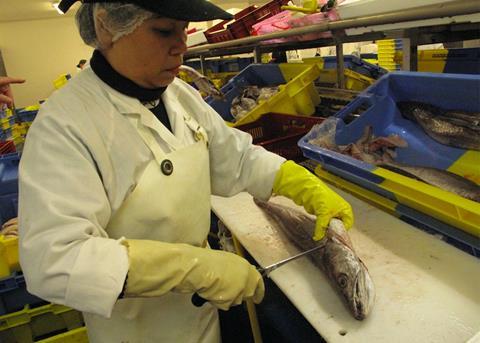
“Let us recall that women occupy a significant part of fisheries workforce, representing half of the entire world labour force in this sector. FAO estimates that women comprise 15% of the harvesting workforce, 70% in aquaculture, 80 to 90% in seafood processing. They also represent 60% of seafood traders and retailers in Africa and Asia. Plainly women are fundamental agents in the organisation and functioning of the local, regional and global flows of seafood.”
According to WSI, men and women occupy distinct roles along the seafood value chain.
“CEOs, board members and fishermen are nearly all male. Staff in processing plants, such as shrimp peelers, are nearly all female,” WSI states.
“The seafood industry shows a strong gendered vertical division of labour whereby a majority of ignored, invisible, unrecognised (IIU) women occupy low-revenue jobs and where top jobs are occupied mostly by men. In that regard, the Coronavirus will strike genders differently so the gender imbalance will be shaping experiences among women and men affected by the pandemic, unequally.”
“Identifying the positions that most women occupy can already shed light on the impacts that this crisis will be having on them. Women mostly present at the bottom may have to continue their working activities to get an income, the opportunity to remain at home available to those at the top not being offered to them. Occupations in processing plants and on retail markets have higher exposure to the virus, and women are behind them.”
According to WSI, one emergency response given by some companies is to protect their frontline employees processing seafood by ensuring decent and safe working environments with proper protective equipment. This requires changes in work routines, purchase in protective equipment and clothing – and not all companies will have complied with these strict recommendations.
Coronavirus and economic crash
WSI’s analysis is that in this world-wide pandemic, markets for labour, seafood and other inputs (such as finances) will be deeply affected. Potential job losses are estimated at 25 million according to the International Labour Organisation. Reductions in business revenues will inexorably result in the reduction of costs by laying off workers, starting with temporary and casual positions disproportionally occupied by women.
“This is already happening in the Chilean salmon industry which is reducing the production capacity of its plants by almost half and layoffs are already happening. We have already seen the early effects on the seafood business and fishing communities relying on imports from China. The consequent rise in prices induces a severe disruption of local markets as seen in Cameroon or South Africa,“ Marie Christine Monfort said.
“The widespread work-from-home movement will enable millions of workers to keep their jobs and their salary partly or fully. But this arrangement is largely available to white-collar workers. In the seafood industry, those office workers protected by full-time work contracts are mainly men. Women in low-paid jobs with insecure employment conditions are at greater risk of losing their income. When women lose their income, they severely cut budgets supporting the well-being of their children, households and communities (housing, food, healthcare or childcare).”
Disruption along the seafood value chain
Key questions are who will be the most affected link in the chain when the seafood value chain will be disrupted – and how the drop in landings and consequent rising prices such as already observed in West Africa affect male fishermen, female processors, female retailers and the entire community?
“How will the stop of movements of seafood impact the different categories of players? We have already witnessed that exhaustion of marine resources has had dramatic impact on women (in charge of processing, trading) and we may fear similar disproportionate and discriminatory effects of the COVID 19,” she said.
“In order to answer these question and to put forward smart and resilient responses, we need gender specific data for the fisheries and aquaculture sectors. Efforts in this direction must also be made in surveillance and monitoring stages of the pandemic. Effective responses need to be backed by quality data and evidence-based solutions. Women must be a part of decision-making process that public authorities will engage in. As far as WSI is concerned we will set up a data collection programme and organise a watch on the local and regional impact of the pandemic.”
WSI predicts that the coronavirus crisis is going to be a severe setback to achieving the 2030 SDGs as resources are focused on the pandemic and the ability of countries to spend on other development priorities, such as combating climate crisis or gender inequality, will be severely constrained.
“We run the risk that in the period of high economic turbulence leaders will think that gender equality (SGD 5) is not a priority, and that it can wait until the economy is looking up. This would amount to repeating a mistake. In overlooking the gender dimension of gender in the seafood industry, policy makers have drawn a wrong diagnosis on marine resources and economic management. Consequently their suggestion to meet SDG14 (Life Below Water) could only but miss the target. What is needed first and foremost is awareness on the fact that SDG 14 will not be attained if 50% of the population it affects is not taken into consideration. Gender must be embedded in all elements and targets of SDG 14 policy,” she said.
“When we are ready to get back on our feet and get the blue economy going again – hopefully a truly sustainable version of the blue economy – decision makers must consider the gender organisation of the industry. We otherwise predict that responses will fail and increase inequalities between women and men. Research from other types of health crises has shown that leaving gender inequalities out of the crisis response has further compounded those inequalities. WSI considers that if we want to find the most effective ways to deal with COVID-19, all workers, especially women need to be listened and associated in building future responses.”







