



The Norwegian Research Council has awarded Dr Sonal Patel an ‘excellent young researcher’ grant for a project that will study why farmed salmon get pancreatic disease (PD) and how the virus that causes the disease works.
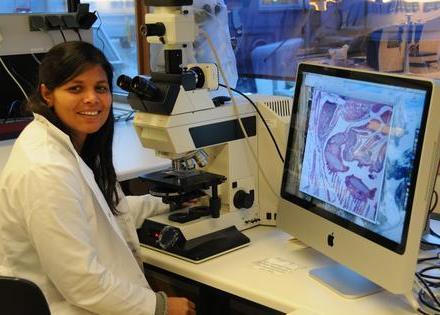
The project, Mitigating the challenges in the Atlantic salmon aquaculture caused by salmonid alphavirus by unveiling the underlying immune mechanisms, will start in January 2013 and run for four years. The project has been awarded NOK8m by the Research Council, with additional funding also provided by IMR, totalling approximately NOK15m.
During the course of the project, Dr Patel and her colleagues will investigate the interaction between farmed salmon and the salmonid alphavirus, and how this virus causes PD. This disease is currently a major problem for the fish farming industry, both in terms of animal welfare and economics.
“Increased knowledge of the interaction between the virus and pre-smolt and smolt salmon will provide the opportunity to improve strategies to combat PD. In this project we will look at ways of improving vaccination strategies and also investigate how stress and smoltification affects the fish's susceptibility to this virus”, says Dr Patel.
The researchers will also examine how susceptible triploid salmon are to PD. Triploid salmon are generated by pressure treatment of the eggs just after fertilization. Triploid fish are sterile, and are likely to become more and more important to the aquaculture industry since escapees will be unable to breed with wild fish.