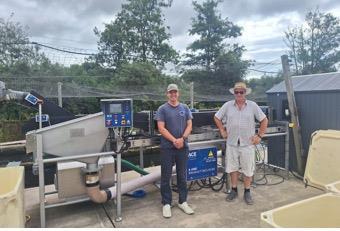



Skretting Aquaculture Research Centre has added a recirculation hall to its Norway operations to enable researchers to conduct precise experiments on its latest closed system feed formulations in strict, closely monitored environmental conditions.
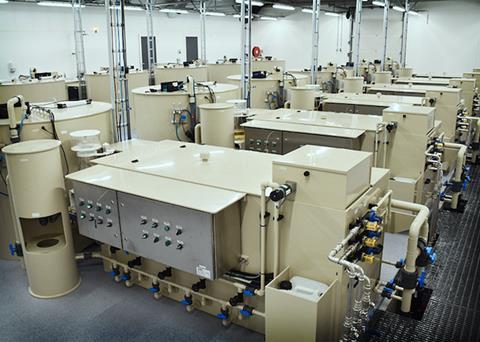
Comprising 12 independent recirculating aquaculture systems (RAS), predominantly conducting trials for salmon product development, the facility at Skretting’s Lerang Research Station in Stavanger enables research on feed and formulations and evaluates feed interactions and influences on system performance.
“Attempts to mitigate the biological risks associated with traditional aquaculture is leading to a lot of momentum for closed fish production systems, and this is happening all over the world,” said Dr Paulo Mira Fernandes, researcher and RAS expert at Skretting Aquaculture Research Centre (ARC) and international director on the Aquaculture Engineering Society board of directors.
Growing importance
The recirculation hall joins Skretting’s existing infrastructure of recirculation research units, located in Chile and Australia. Their importance is growing quickly as more production facilities emerge that require customised feeds.
“While these are unique systems with their own particular challenges, Skretting has been operating within this space for a long time; we brought the first recirc-specific diet to the market in 2009. The knowledge and expertise that we continue to amass along with the R&D facilities that we have in place will prove invaluable as more and more of these systems come on stream,” added Fernandes.
Producers using RAS can also utilise Skretting’s AquaSim management tools, which predict farm performance and enable production optimisation. AquaSim provides recommendations on the most cost-effective stocking patterns, feed selection and feeding strategy.