



Aquaculture is a known introduction pathway of invasive alien species, which have become direct facilitators of biodiversity decline worldwide. More importantly, several species that pose severe threats have not been discussed and weighed upon publicly for their prospects and impact. One such case may be the redclaw crayfish, but is it? Report by Phillip Haubrock, Francesco J. Oficialdegui, and Antonin Kouba.
An invasive species is an organism that translocated and introduced outside of its native range by humans, is able to establish, thrive and spread, thereby often-causing considerable ecological or socio-economic harm. Indeed, invasive species are capable of reducing biodiversity, competing with native organisms for limited resources, altering entire habitats, and ultimately can cause extinction of other species. So, or similar, invasive species are often described in the scientific literature. This designation may adequately suit a considerable list of species worldwide.
Several of these are famously, or rather infamously, known for their long history in aquaculture. This comes no surprise, as aquaculture enterprises have since had a front seat in the ongoing globalization, participating in the economic growth of many countries. Indeed, aquaculture is not only an economic force connecting the most distant countries by the export of its products but also an important vector for species by exporting them across the globe for local production and profit. While this may not be a bad thing by itself, the number of historically old aquaculture species that have become known for their ecological and even economic impacts is staggering. Famous examples are for instance tilapia, representing hundreds of species of cichlids, from which a selected few are an integral aquaculture commodity. Nevertheless, likely as a direct result of its appreciation as a food item, tilapia are now also found in various countries in the wild where they are found to damage native biodiversity. Another famous example for instance is the red swamp crayfish Procambarus clarkii. This decapod crustacean, originally from North America, is now almost globally present in aquaculture while also having established reproducing populations in over 40 countries. This is noteworthy, because its presence was shown to cause a sharp decline in biodiversity, habitat naturalness, and ecosystem functioning amidst further impacts that would go beyond the scope of this article.
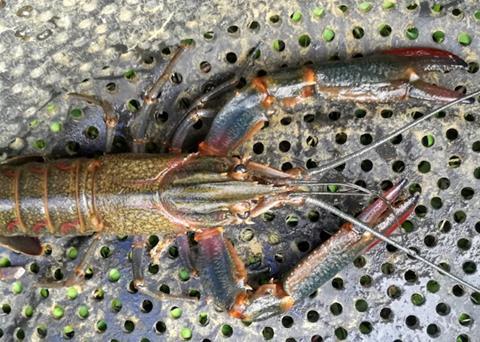
Another relatively unknown potential invader which has had a strong presence in crustacean aquaculture is the redclaw Cherax quadricarinatus, a decapod crustacean native to northern Australia and South New Guinea (Figure 1). Amidst a rocky history in aquaculture with enterprises rising and failing, it is nowadays almost globally produced. FAO for instance lists an average global production of 200 tons per year, mostly outgoing from countries such as Australia, Ecuador, México. and recently, Indonesia and Malaysia (Figure 2). Today, it also took a strong foothold in the global pet trade. This, and its success in aquaculture, are mostly due to its rapid growth and high fecundity under optimal conditions, but also conspicuous colouration. However, relatively little has been said about the incidences this crayfish species has escaped aquaculture facilities when these were shut down or hit by natural disasters such as flooding events – facilitated by often dire conditions (Figure 3). Globally, established wild populations (a consequence of accidental escapes or purposely releases) have been reported in as many as 22 countries/territories. Established populations, for instance in Ecuador or Costa Rica go back to such escapes, while populations found in few others likely go back to releases from the pet trade.
Recently, using commonly applied impact and risk assessment schemes deemed to characterise the potential danger a species poses, redclaw has been suggested to pose major threats. Indeed, among the sites where the redclaw has been established, severe ecological impacts have been reported. These range from damages to fishing gear, to lower productivities of local fisheries, interspecific interactions with native species, and strong declines in biodiversity. Exemplary cases for these have been shown from populations in South America, Africa, and Singapore. However, these impacts have been shown in relatively few countries, hitherto a lack of research and common neglect of this species facilitated by the economic gains derived from its production. Thus, the lack of studies describing its impacts is striking and simultaneously, worrisome.
Having investigated the available literature on this species in great detail, knowing the history of other crayfish species introduced across the globe and their fateful consequences today, considering the economic benefits of this species’ culture especially on the local economy and particularly for local communities - which cannot be neglected - the dire impacts this species can have ought to be considered.
The abovementioned threats posed by the redclaw have recently been reviewed by Haubrock and others emphasising the direct and indirect threats this crayfish invader can pose for native biodiversity. However, aquaculture without redclaw is unthinkable due to its direct, profitable nature. Hitherto the conditions of often ‘localized’ enterprises (Figure 4), escapes do happen, often leading to irreversible damages. Aquaculture enterprises should be aware of all of that, considering the pros and cons, but also the responsibility they have when setting up redclaw productions.