




New tool to help secure scallops
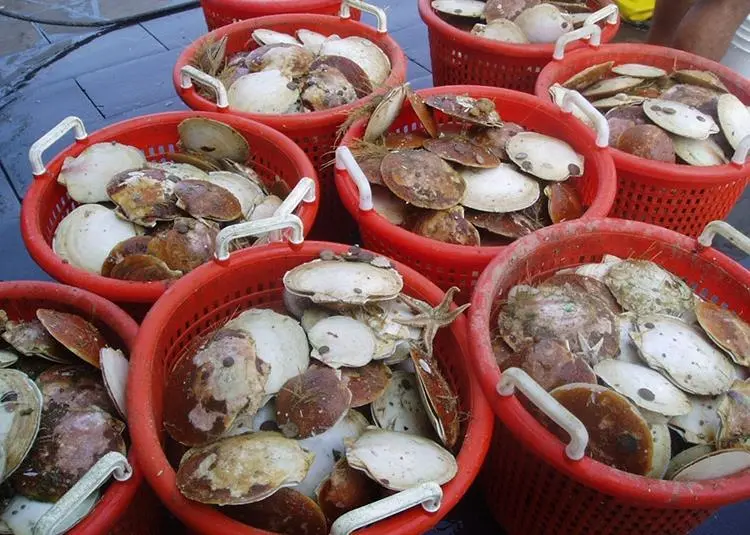
A computer programme has been developed to help bring the US$559m United States sea scallop fishery back from the brink of collapse.
USA-based Woods Hole Oceanographic Institution (WHOI), NOAA’s National Marine Fisheries Service and Ocean Conservancy worked together to develop the programme, which simultaneously simulates ocean conditions, sea scallop population dynamics and economic impacts on the fishery.
In the past, each element was considered separately, so it wasn’t possible to anticipate the full range of impacts of environmental changes, says WHOI.
“Combining ocean chemistry, biology, fishing and economics into a single model was a real challenge, but the effort is critical if we are going to provide useful information to fishing communities and resource managers,” said Scott Doney, marine chemist, WHOI.
The developers say the ‘tool’ is intended to help everyone who is part of the fisheries management process. Output from the model ultimately will be available on an interactive website, where users can compare and contrast the effects of different management, environmental, and market scenarios.
To date, the researchers have analysed just one scenario with the model. It shows that with current harvest levels and business-as-usual carbon dioxide emissions, sea scallop harvests may decline over the next several decades, and landings of larger scallops may be less abundant. The authors highlight, however, that this is just one possible future scenario.
Additional scenarios need to be evaluated, and more detailed information is needed regarding the impacts of warming and ocean acidification on sea scallops, says WHOI.
Related Articles
 FISHERIES
 FISHERIES
 WORLD FISHING EVENTS