



New markets for lumpfish to be explored
Norwegian food research institute, Nofima, has launched a project to find out if there could be other markets for lumpfish, apart from in the fight against sea lice.
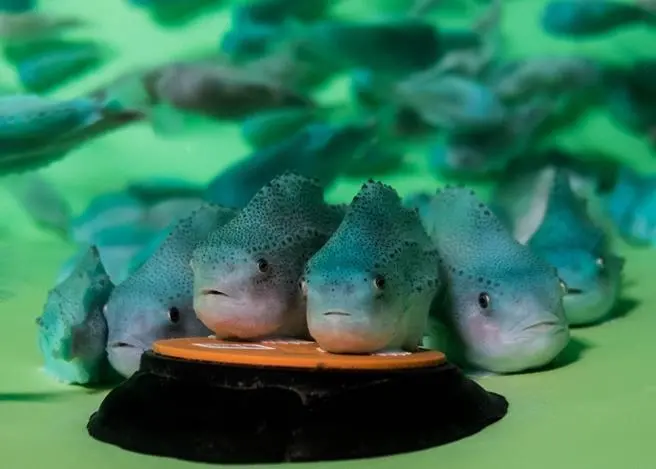
The salmon industry has worked hard to combat sea lice, and lumpfish have proven to be a promising lice deterrent. Lumpfish are released into salmon pens when they weigh 20 grams. But when they reach around half a kilo, their task as louse eaters is usually done and currently there is no use for the fish and they are usually ground up into animal feed.
“It’s not right that a valuable source of protein should be ground into animal feed,” says Nofima researcher Bjørg Helen Nøstvold.
Lumpfish roe is considered a delicacy. The actual fish, however, is quite unlike all other fish in Norwegian waters. For this reason it has never become a part of the Norwegian diet.
In the project ‘From louse-eater to the dinner plate’, Nofima and salmon producer Lerøy Aurora will attempt to find out if there is a new market for lumpfish, starting with Asia. The project has been funded with NOK 300,000 from the Troms county council and NOK 250,000 from the Regional Research Fund North.
Work has begun on assessing what is available in terms of expert data and whether any markets consume this species.
“Based on studies of available secondary information, we will select a market and travel there to investigate further. Who are the buyers, how can the fish be used? What kind of prices are likely, and so on? We do for example know that small quantities of wild-caught lumpfish have been exported from Iceland. We also know that businesses have worked on establishing a market in South Korea, but we don’t know how they have fared,” Bjørg Helen Nøstvold says.
However, before any new markets are approached, the Nofima researchers want to get to know the fish better.
“Lumpfish have thick skin and a lot of cartilage and bones, so those who prefer fillets and loins will probably steer clear of it”, Bjørg Helen Nøstvold says.
Related Articles
 FISHERIES
 FISHERIES
 WORLD FISHING EVENTS