


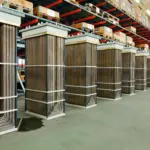



New low-salinity slurry system
Sunwell Technologies Inc. of Canada, in collaboration with Slurry-21 Co. Ltd., part of the Hitachi Zosen Group of Japan, has delivered the world’s first onboard low-salinity slurry system, producing slurry with approximately 2 to 3% salt content.
This new system was installed aboard the fishing research vessel “Hokusho Maru”, owned by Hokubu Makiami Gyogyo Inc. of Japan, and designed to operate as a ‘Single-ship’ fishing vessel. The construction of the 300GT purse seiner was completed in Niigata Shipyard, Niigata prefecture, in September, at a total construction cost of 1.54 billion Yen.
Mr Kawamoto, President of Hokubu Makiami Gyogyo Inc., explains the importance of the new Deepchill Slurry Ice System on the research vessel; “Fishermen are suffering because of lower fish prices. We want to demonstrate that this ice would add value to their fish. Once we document it, they will know you don’t have to construct a completely new ship, just install this slurry ice system onboard, and then you would sell fish at higher prices. That’s what we believe.”
According to Sunwell’s Marketing Manager, Mr. Gabriel Lopez; “With one Deepchill Variable-State Slurry Ice System, our clients can get a complete range of ice states – from very liquid ice slurry, to a very thick paste, and even dry (liquid free) ice crystals. One can also precisely control the salinity, so you can get salt-free slurry or salt-water slurry of any salt concentration. We can even control the size of the crystals – all to suit any preservation requirement. In the case of the “Hokusho Maru”, it was determined that deepchill slurry with 3% salinity and 30 to 50% ice fraction (percentage of ice to liquid in the slurry) would provide ideal cooling for maximum preservation results with no damage to the fish and avoiding excessive salt uptake by the fish.”
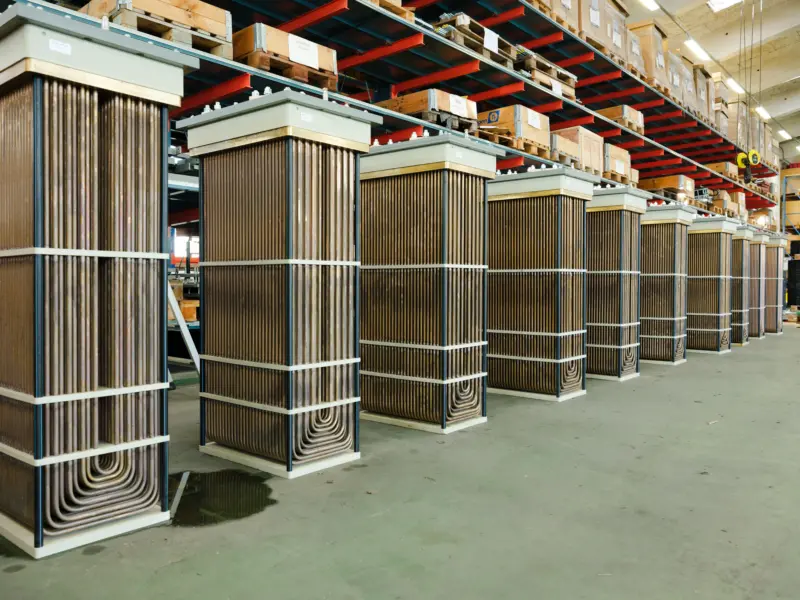
The system onboard the “Hokusho Maru” has the capacity to produce 20 tons/day of dry ice crystals, or 60 tons of deepchill slurry with 30% ice fraction (percentage of ice to liquid). During the trip from the port to the fishing grounds, the Deepchill System cools seawater down to the freezing point and produces ice crystals in a slurry ice form. The slurry is delivered to a compact, patented design Separator/Dispenser Tank where the crystals are separated from the slurry. These crystals are dispensed into a mixer and mixed with seawater containing 3 to 3.5% salinity to produce slurry of 30 to 50% ice fraction. Some of the crystals melt during the mixing process, diluting the seawater and dropping the salinity level down to the desired 2 to 3%. The deepchill slurry is continuously generated and pumped into one of eight 50m3 fish holds.
Lopez says; “The patented Separator/Dispenser Tank is what makes the low-salinity slurry possible. Other slurry systems can’t produce the liquid-free ice crystals needed for the low-salinity slurry. Sunwell has been doing this with land-based systems for over 25 years – we just redesigned this unit to make it small enough to put onboard a fishing boat.”
The “Hokusho Maru” will fish tuna or skipjack from April to October, and mackerel and sardine from November to February. Upon catch, warm fish is placed immediately into the fish holds containing the deepchill. As cooling occurs and the deepchill melts, seawater is removed from the holds and fresh deepchill is added. This procedure is repeated until the fish temperature reaches 0°C. When fishing for tuna or skipjack, the boat fishes for about five days and returns when all holds are full.
According to Mr Sakurai, division manager of Hokubu Makiami Gyogyo Inc., who has experience with the deepchill system on the vessel’s predecessor; “The fish caught can be chilled quickly onboard, so that the capacity for freshness preservation is higher, compared with crushed ice. In addition, it does not hurt the surface of the fish – also it has merit for labour saving.”
Related Articles
 PROCESSING & REFRIGERATION
 SEAFOOD
 SEAFOOD