




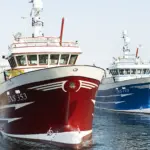

New labour standards for fishers worldwide
New labour standards designed to improve the conditions for roughly 30 million men and women working in the fishing sector worldwide were adopted at the 96th annual conference of the International Labour Organization (ILO).
“Fishing is a unique way of life”, said Captain Nigel Campbell, Chairperson of the Conference Committee. “This new Convention reflects not only this uniqueness but the demands of globalisation in an ever expanding sector that exposes men and women to considerable hardships and danger.”
The new ILO Convention was adopted by government, worker and employer delegates at the International Labour Conference by a vote of 437 for, two against, with 22 abstentions. The Convention, to be known as The Work in Fishing Convention, 2007 (No.188), will come into effect when it is ratified by 10 (including eight coastal nations) of the ILO’s 180 member states. An accompanying Recommendation (No. 199) was adopted by a vote of 443 for, zero against, with 19 abstentions.
The new standards contain provisions designed to ensure that workers in the fishing sector:
• Have improved occupational safety and health and medical care at sea, and that sick or injured fishers receive care ashore
• Receive sufficient rest for their health and safety
• The protection of a work agreement
• Receive the same social security protection as other workers
Its provisions are also aimed at ensuring that fishing vessels are constructed and maintained so that workers have living conditions on board that reflect the long periods they often spend at sea.
ILO Director General Juan Somavia commended all who had worked on the new Convention, noting the extraordinary level of collaboration among governments and worker and employer representatives in drafting this instrument.
“Extending the net of social protection and decent work to fishers is an important part of the ILO’s commitment to social justice,” he said. “In the fishing sector many people face extraordinary and unpredictable hazards, often working long hours in harsh conditions to bring food to our markets. This new instrument will help protect them against exploitation.”
The next step following the adoption of the Convention by the International Labour Conference is for Member States to put the measure to their national authorities for ratification.
Related Articles
 FISHERIES
 FISHERIES
 WORLD FISHING EVENTS