




The International Seafood Sustainability Foundation (ISSF) has announced new contributions from three organisations that will support at-sea science projects with the goal of reducing bycatch in tuna fisheries.
The Western Pacific Regional Fishery Management Council (WPRFMC) donated $100,000 to fund the purchase of new equipment including acoustic tags, tracking equipment, survival tags, GPS sonar buoys, and other high-tech equipment for at-sea research in the Western and Central Pacific region.
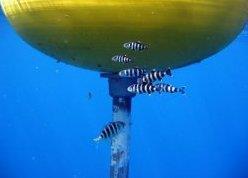
Marine Instruments, S.A., a Spanish electronic company specialising in tracking systems for the marine environment and fishing sector, along with American geospatial technology developer, GeoEye, have each donated several M3i buoys, which feature built in echo-sounders that can be used for tracking and monitoring FADs. GeoEye has also donated a subscription to its SeaStar Fisheries Information Service, providing daily oceanographic charts and weather forecasting for ISSF-sponsored research.
“The generous contributions we have received from the Western Pacific Regional Fishery Management Council, Marine Instruments and GeoEye will give research scientists access to equipment that we believe will lead to a new standard of best fishing practices, and ultimately better conservation of our ocean’s resources” said ISSF president Susan Jackson.
Cruises are scheduled to hit the water in the Indian Ocean in late March and in the western and central Pacific Ocean in April, teaming scientific researchers with experienced fishing crews onboard operational tuna vessels.
Scientists will use the new equipment to study the natural behavior of marine life around FADs. Acoustic tags allow researchers to track the survival of species that are released alive, while the various buoys have the potential to help skippers identify the species composition around a FAD before fishing, allowing for vessels to avoid catches of non-targeted species.