




Scientists have developed a microbattery that packs twice the energy compared to current microbatteries that is set to “revolutionise” salmon tracking around the world.
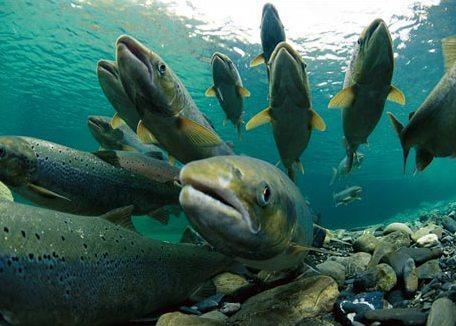
The battery, a cylinder just slightly larger than a long grain of rice, has been created by scientists at the Department of Energy’s Pacific Northwest National Laboratory (PNNL) in the USA to monitor the movements of salmon through rivers.
"For years the chief limiting factor to creating a smaller transmitter has been the battery size. That hurdle has now been overcome," said M. Brad Eppard, a fisheries biologist with the Portland District of the US Army Corps of Engineers.
The lighter battery translates to a smaller transmitter which can be inserted into younger, smaller fish, which PNNL says also makes it less invasive and stressful for the fish than surgical implantation, and is a faster and less costly process.
This makes it possible for scientists to track their welfare earlier in the life cycle. The new battery can also power signals over longer distances, allowing researchers to track fish further from shore or from dams, or deeper in the water.
The batteries can power a 744-microsecond signal sent every three second for around three weeks, or every five second for a month, and work better in cold water where salmon often live.
The Corps and other agencies use the information from tags to chart the welfare of endangered fish and to help determine the optimal manner to operate dams.
A PNNL team surgically implanted 700 of the tags into salmon in a field trial in the Snake River last summer. Preliminary results show that the tags performed very well. The results will be released in a forthcoming publication.