



The International Commission for the Conservation of Atlantic Tuna (ICCAT) has received a largely negative response to its multi-annual management plans adopted at its recent annual meeting.
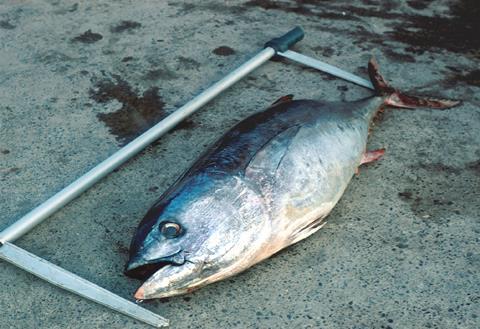
In short, the measures adopted mean that the TAC for Eastern bluefin tuna for 2010 has been reduced from 22,000t to 13,500t. The fishing season for purse seiners will also be reduced from two months to one month per year (15 May - 15 June).
The European Commission has welcomed this move and European Commissioner for Maritime Affairs and Fisheries, Joe Borg, said: "This unprecedented set of concrete and ambitious steps will mark decisive progress in managing and conserving this migrating stock in the Mediterranean and the Atlantic. Our goal is to ensure the return to a healthy bluefin tuna stock and a viable and sustainable fishery for our fleet. Admittedly, ICCAT had a very tough task this year, but it has certainly risen to challenge."
However, many conservation and environmental groups do not feel the same. They generally believe that ICCAT has not listened to the scientific advice it has been given.
WWF is renewing its calls for an international trade ban in Atlantic bluefin tuna after ICCAT "failed to agree on measures that will ensure the recovery of the species". The organisation says that the reduction in quota is still far too high to enable stock recovery.
According to WWF, a study presented to ICCAT at the meeting showed even a strictly enforced 8,000t quota would have only a 50 per cent chance of achieving a recovery in eastern Atlantic bluefin tuna by 2023. Another ICCAT study showed only a total fishing halt yielded significant chances of the bluefin population recovering enough to no longer qualify for high-level trade restrictions by 2019.
Sally Bailey, Marine Programme Manager at WWF-UK said: “Now, more than ever, WWF sees a global trade ban as the only hope for Atlantic bluefin. ICCAT’s reduction in quota is not based on scientific advice, and is entirely unacceptable.”
Greenpeace is in agreement with this: "Yet again, ICCAT has failed to give bluefin tuna any chance of recovery“ said François Provost, Greenpeace International oceans campaigner. “A ban on international trade in Atlantic bluefin tuna is now the only remaining chance to save the iconic fish from commercial extinction”.
Pew Environment Group also said: "Since its inception, the International Commission for the Conservation of Atlantic Tunas has been driven by short-term commercial fishing interests, not the conservation ethic implied by its name,” said Susan Lieberman, Director of International Policy for the Pew Environment Group. “Only a zero catch limit could have maximised the chances that Atlantic bluefin tuna could recover to the point where the fishery could exist in the future.
With regards to the other species discussed, only one other measure was adopted that will help conserve sharks in the Atlantic, a ban on the retention and landing of big eye thresher sharks.