


A ground-breaking project pioneered by the distillery Glenmorangie has seen the Native European oyster reintroduced to coastal waters around the Scottish Highlands after a century’s absence caused by overfishing.
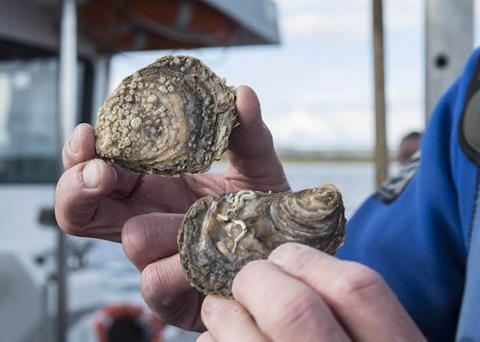
Underlining the Distillery’s commitment to a sustainable future, Glenmorangie forged an ambitious partnership with Heriot-Watt University and the Marine Conservation Society (MSC) under the auspices of the Dornoch Environmental Enhancement Project (DEEP), in order to re-establish the oyster.
Hamish Torrie, director of corporate social responsibility, The Glenmorangie Company, said: “Glenmorangie’s Distillery has stood on the banks of the Dornoch Firth for over 170 years – and we want to ensure that the Firth’s pristine habitat will be preserved and enhanced over the next 170 years.”
The project’s vision was to restore long-lost oyster reefs to the Firth, to enhance biodiversity and also act in tandem with the anaerobic digestion plant to purify the by-products created through the distillation process – an environmental first for a distillery.
Project DEEP saw 300 oysters from the UK’s only sizeable wild oyster population in Loch Ryan placed on two sites in the Firth. Over the next 18 months, they will be studied by Heriot-Watt University researchers with the aim of building an established reef within five years.
Glenmorangie’s €6million anaerobic digestion plant is expected to purify up to 95% of the waste water that the distillery releases into the Firth with the remaining 5% of the organic waste naturally cleaned by the oysters.