



The Marine Stewardship Council (MSC) and the Aquaculture Stewardship Council (ASC) are working together to create a joint global standard for certifying seaweed operations, and have launched a public consultation on the Seaweed Standard.
The Seaweed Standard will contribute to the health of the world’s aquatic ecosystems by promoting environmentally sustainable and socially responsible use of seaweed resources.
With seaweed production increasing alongside demand for certification, the MSC and ASC say that they recognise the importance of having a global standard that rewards environmentally sustainable and socially responsible seaweed production, and provides a benchmark for improvement.
David Agnew, science and standards director of the MSC said, “The Seaweed Standard will demonstrate mutual sustainability principles and standard systems, referencing best available scientific understanding and industry practices that conform to international norms of good conduct, including FAO Guidelines for Ecolabelling and ISEAL Codes of Good Practices.“
From 1 March, interested parties are invited to view the proposed Seaweed Standard and certification process, and share their expertise and feedback through an online consultation which is open until 30 April 2016.
The standard will allow certification from both wild harvest and farmed seaweed, regardless of the scale or location of the operation. The assessment of seaweed farms and fisheries will be guided by five core principles: sustainable populations; minimising environmental impacts; effective management; social responsibility; and community relations and interactions.
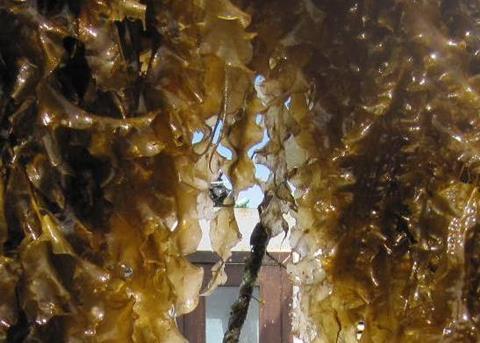
Seaweeds and other algae are used widely as food, in cosmetics and fertilisers, and are processed to form binding agents (emulsifiers) for toothpaste and fruit jelly. They also play a critical role in our aquatic ecosystems, providing food, shelter and habitats for a wide range of organisms including fish, shellfish, marine invertebrates and corals.
According to the FAO, around 25 million tonnes of seaweeds and other algae are harvested, representing over 15% of the total world fisheries and aquaculture production globally, with an estimated annual value of US$5.65 billion. Wild harvest supports a significant portion of the industry, however seaweed aquaculture has grown rapidly to meet increasing demand.