



Dutch antifouling provider, Micanti, enjoyed success at this year’s Seawork Exhibition with its Thorn-D antifouling technology.
Micanti’s Thorn-D antifouling has fibres, which create a textured surface to act like a physical barrier against marine growth, without releasing any toxic chemicals which harm marine life, unlike traditional antifouling.
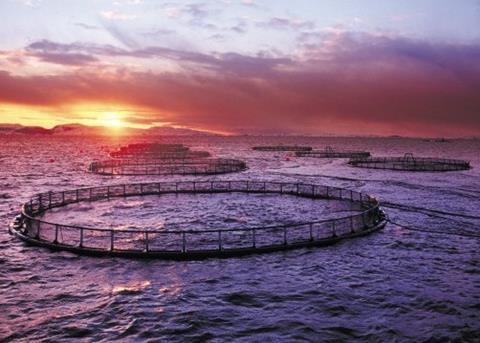
These fibres are applied to fish farm nets and cages to prevent macro fouling, like mussels, barnacles and algae, from settling on cage structures and strength ropes for up to five years.
Eric Pieters, commercial director, Micanti, told World Fishing and Aquaculture: “We have chosen the fish farming industry, where fouling is a huge problem, as a first market segment. Preventing marine growth on static objects like fish farm nets, where fish are fed every five minutes, is far more challenging than moving objects, like vessels."
Accredited by Lloyd’s Register, ABS and Bureau Veritas, the fibres were first tested in Turkey, which is known for its rough fouling conditions, at Pinar Deniz fish farm facility, part of Yasar Holdings and one of the largest fish farms in Turkey.
At the end of the summer season, algae were only present on the top 3m of the nets. From 3m to 15m down, the nets remained completely free of fouling.
"We've seen 'clean nets' in Turkey for more than five years now," Mr Pieters added.
Micanti says this results in reduced maintenance and lifecycle costs for fouling prevention, as well as healthier and larger sized fish as a result of improved cleanliness and oxygenation.
The company has also applied its Thorn-D technology to salmon farming countries like Norway, Scotland and Canada and told WF it is now concentrating on the Mediterranean and Chile.