



The Mermaid and Ford names are inextricably linked, as for more than forty years UK-based Mermaid Marine marinised and supplied Ford diesel engines for commercial and leisure use, and there are thousands of Ford engines in use across Europe and beyond that have their origins in Mermaid Marine’s Poole workshops.
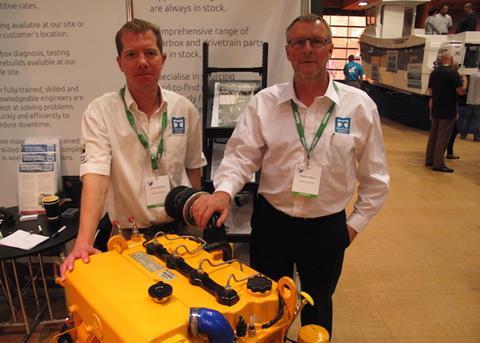
Now back with Mermaid Marine managing the company’s product support after a break of a few years in another diesel engine sector, Stephen Atkins explained that the company changed hands in 2011 when Power Torque took over ownership, which brought a new beginning to the history with Ford that had been in place since 1970.
“Now we are supplying a range of newJCB, FPT, FNM, Lombardini and Kolher engines,” he said, and commented that after numerous operator and owner requests for the traditional Ford Mermaid engines, Mermaid Marine has returned to them to offer servicing, parts and the option of a service exchange and full rebuild programme of these old but trusted engines, even going so far as to search out sources for components that are no longer available.
“We ran out of the supercoolers that were part of the Ford Otosan range. These had been made in the UK but the original manufacturer could no longer supply them, so we found a supplier and now Clements Engineering makes these for us,” he said.
“There is a massive demand for these engines worldwide and we have supplied them to Nigeria, the UK and all over Europe, with the demand roughly split between classic boats and fishing vessels,” he said, commenting that every port has an engineer who knows these Ford engines inside out.
“There are no electronics and no special tools are needed to work on them. Well-established fishing vessel owners like them because they are a reliable, familiar, old-school engine, and Power Torque have invested a great deal in old units to make it possible for this to continue.”
As well as the old-school Ford engines, Mermaid Marine’s main business remains new engines for commercial and leisure craft, with the JCB engines establishing themselves as a reliable workhorse.
“It’s a four-cylinder engine that develops 80 to 120 horsepower, also with no electrics,” he said, commenting that a recent re-engining job was for a Gemini catamaran fishing from Selsey in the south of England that he had supplied with a pair of Ford Manta II engines when it was new more than fifteen years ago.
“The JCB engine has so much torque that it does everything a 6-cylinder engine does, and better, as well as being more fuel efficient and with better emissions,” Stephen Atkins said.
“So it wasn’t easy for the Harvey brothers to take this on board when I was telling them to replace their twin 6-cylinder Manta II engines with a pair of 4-cylinder JCBs. But they ended up taking out their 7.5 litre engines and putting in a pair of 4.5 litre JCB 444NA engines instead, but these have performed absolutely as required.”
He added that the two 15-year old Manta II engines will now get a new lease of life elsewhere after they have been rebuilt by Mermaid Marie.
The JCB engines as fitted to the Harvey brothers’ Gemini are rated at 85hp, and with a turbocharger they go up to 110hp. The turbocharged and intercooled model produces 125hp and the electronically-controlled model at the top of the range produced a massive 160hp.