
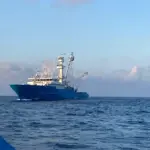





Marine zoning to benefit tuna?
A fish modelling study has found that marine zoning in the Pacific Ocean, in combination with other measures, could significantly improve dwindling numbers of heavily overfished bigeye tuna and improve local economies.
Scientists at the University of Hawaii, the Secretariat of the Pacific Community (SPC) and Collecte Localisation Satellites (CLS) have found that a network of marine zones in the Pacific Ocean could be a more effective conservation measure than simply closing relatively small areas to some types of fishing.
These marine zones, where different fishing activities are allowed in different areas, may have significant and widespread benefits for bigeye tuna numbers.
After testing the effectiveness of a range of conservation measures with an ecosystem and fish population model, the team found that the most efficient measures were to restrict both longline fishing in tuna-spawning areas and the use of fish-aggregating devices.
“We found that simply closing areas off to fishing doesn’t work, because the boats just move their operations to neighbouring zones and chase fish even harder. It’s going to need a combination of approaches,” said Dr John Hampton, from the Oceanic Fisheries Programme of the SPC, one of four scientists leading the study.
“The model will help people evaluate different ways of managing tropical tuna fisheries. Our predictions can help countries estimate how effective conservation measures might be, relative to any economic effects, and tailor measures to suit their goals. The advantage of this approach is that effects can be estimated locally, as well as for the stock as a whole.”
Dr Hampton says the study calls for a complete economic valuation of the Western Central Pacific Ocean tuna fishery.
Related Articles
 FISHERIES
 FISHERIES
 WORLD FISHING EVENTS