


Marine ingredient certification and the blue revolution
Third-party certification may not be to the liking of everyone connected to aquaculture, but it is proving an important tool for keeping the increasingly burdened industry in check, writes Jason Holland.
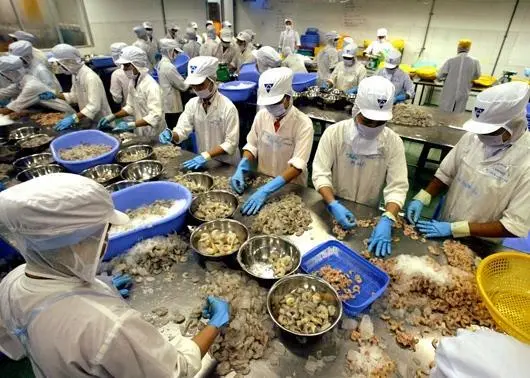
Aquaculture will reach a milestone in 2014; this will be the first year that the human consumption of farmed fish will exceed that of wild capture fishery products. Today, aquaculture is the world’s fastest growing food production industry, increasing at a rate of around 8% year-on-year, which is nearly double that of most other sectors, according to the Food and Agriculture Organization of the United Nations (FAO). The FAO further forecasts that by 2030, two-thirds of the seafood we consume will be farm produced.
But with the global wild fish supply stagnating and the planet’s population set to grow by an additional two billion people by 2050, the aquaculture industry is under immense pressure to produce much more than it is at present. At the same time, the need to ensure best practice remains a sector priority and at the heart of this commitment is an overriding need to ensure the sustainable supply of marine ingredients.
Marine ingredients are essential to fish farming as they give end products the levels of EPA eicosapentaenoic acid (EPA) and docosahexaenoic acid (DHA) wanted by consumers, but the sector is much more complicated than direct fishmeal and fish oil inputs from reduction fisheries such as the Peruvian anchoveta (Engraulis ringens), says Dr Andrew Jackson, technical director of IFFO, The Marine Ingredients Organisation.
Speaking at the recent Humber Seafood Summit in Grimsby, UK, Dr Jackson told delegates that around 30% of the world’s fishmeal and fish oil now comes from trimmings produced by fish processing factories and this contribution to the overall total is rising steadily. Another increasingly important source is grown algae.
He adds that while large volumes of marine ingredients go towards the rearing of land animals, it is aquaculture that faces the brunt of the criticism, with people wanting to know the feed components’ origins.
Rise of aquaculture standards
As far as aquaculture is concerned, the certification concept began in the 1980s when it became accepted there was widespread policy failure and rife overfishing.
“There was a feeling of ‘we need to do something about this’, and also food safety issues were moving further up the agenda,” says Dr Jackson. “Into the 90s, there was the defining of what was meant by sustainability and there were emerging standards. This was followed [in the 2000s] with the arrival of eco-labels such as MSC (Marine Stewardship Council) and then began the whole issue of what is the credibility of the standard.”
More recently, the high-profile investigation published by UK national newspaper The Guardian that claimed slavery is widely practiced aboard fishing vessels affiliated to the Thai shrimp feed industry has propelled social issues into the public domain. At the same time, Dr Jackson says there remains strong concerns about the lack of fisheries management in many regions and aquaculture’s contribution to the overfishing of stocks and illegal, unreported and unregulated fishing (IUU). There is also anxiety further down the supply chain, particularly regarding the loss of visibility in feed factories in developing markets and the adulteration of ingredients and species mixing, as well as pollution and social conditions in those facilities.
No one size fits all
Aquaculture certification exists on many levels and whenever stakeholders are considering certifying, they need to ask themselves what they actually want certified: do they want certification for the fishery or for the social conditions on board fishing vessels? Similarly, do they want the responsible processing of fish by-products to produce fishmeal and fish oil to be certified or do they want certification for the quality of the finished fish oil or fishmeal?
They might want all of it certified and that is where they encounter problems, suggests Dr Jackson.
“There is a plethora of standards out there and it’s a long supply chain. None of them are perfect; none of them tick every single box. Really the question is how many of those boxes do you want ticked.”
In total, six million tonnes of fishmeal and fish oil are produced worldwide, of which 42% now comes from factories that have been approved under the IFFO RS standard that was launched in 2009. In addition, about 7% of marine ingredients (including by-products) are MSC-certified and 8% are Friend of the Sea-certified.
“The 42% was fairly easy; it’s now going to get a lot harder. We are very under-represented in Asia, where there is currently just one factory certified to IFFO RS,” concedes Dr Jackson. “Many of the fisheries in Asia are multispecies fisheries and can’t be evaluated using current conventional methodology. New approaches are needed and there are a lot of us looking at it.”
In this regard, IFFO RS has already developed an Improvers Programme to act as a ladder for fisheries and factories in Asia to demonstrate their commitment to achieving its standard. IFFO is also supporting the current overhaul of Seafish’s Responsible Fishing Scheme (see WF&A September 2014) and its potential to help address social issues on board fishing vessels in far flung waters.
Russian doll principle
To tackle the confusion that surrounds aquaculture standards, another measure advocated by Dr Jackson is the so-called ‘Russian doll principle’, whereby IFFO’s marine ingredients standards, for example, are housed within leading market facing standards like the Aquaculture Stewardship Council (ASC) and the Global Aquaculture Alliance’s (GAA’s) Best Aquaculture Practices (BAP).
“ASC is currently working on a new feed standard that should be launched sometime next year. While it’s too early to say at the moment what the outcome will be, I would hope there be will be a role for our standard as their hope is to incorporate other standards using this Russian doll principle too.
“It is not necessarily about eco-labels or informing the consumer. It’s not about telling good news; it’s about protection against bad news. The consumer doesn’t want to know about us specifically, but if you have an ASC or BAP product there should be the reassurance that the fishmeal and fish oil is covered,” he says.
Related Articles
 SEAFOOD
 AQUACULTURE
 SEAFOOD