


The International Pole & Line Foundation (IPNLF) is making the case for ocean conservation and profitable fisheries highlighting the case for one-by-one fishing zones at St Helena''s first-ever international conference.
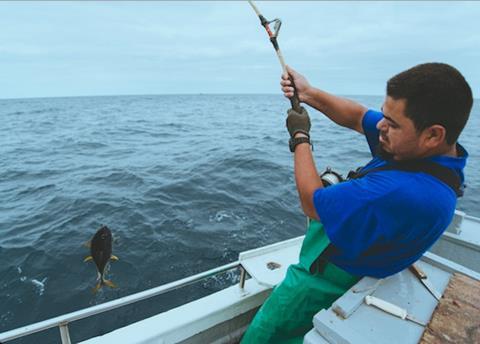
Alongside the conference, IPNLF has launched its new film, St Helena Tuna - The one-by-one philosophy.
The innovative approach excludes other fishing methods in a vast ocean area surrounding St Helena, which is hoped will provide unprecedented long-term protection for the island's precious marine resources while increasing the economic returns for one of the world's most isolated communities.
Allied with the long-awaited arrival of a commercial air service, St Helena's fisheries now have the ideal platform from which to reach important international markets, attendees heard at the island's inaugural international conference (29 January - 8 February 2018).
Speaking at the event, entitled St Helena Conference 2018: Diverse Island Environments, IPNLF Director of Policy & Outreach Adam Baske explained that the project is working with local stakeholders to establish policies to promote and protect the vibrant marine ecosystem as well as the local one-by-one tuna fishery that has been part of the community for hundreds of years.
Launched by IPNLF, the St Helena Government and the St Helena Fisheries Corporation, with support from the local fishermen, the project aims to establish best-practice traceability, transparency and data recording systems while also working to deliver better returns through quality improvements and market gateways. It aims to raise the international profile of St Helena as both a sustainable fishery and a world-class ecotourism destination, while also demonstrating to other governments and coastal communities the potential of a model that rewards low-impact fisheries and marine conservation.
"This is a unique opportunity for St Helena to show the rest of the world the great things that can be achieved when conservation meets a sustainability-minded and community-centric commercial sector. By protecting the marine environment and providing the tools to capture larger financial returns, this project intends to address common challenges faced by coastal fishing communities all over the globe," Adam Baske said.
"This is a relatively simple model and one that can be easily replicated in tuna fisheries around the world. What's proved crucial here in St Helena, and what will be the case in other locations, is that the project has had the full cooperation and collaboration of all the local stakeholder groups."
"A healthy ocean leads to a healthy fishing industry. One hook, one fish at a time, St Helena fishermen have long caught the most amazing, fully traceable tuna,” commented the Chair of the St Helena Commercial Fisherman's Association. “This project and IPNLF's on-the-ground support will make a significant contribution to the local seafood community by helping improve our market access. With the airport now open, a lot more opportunities are open for St Helena's sustainable one-by-one caught tuna."
The St Helena Conference also debuted the latest film from IPNLF, St Helena Tuna - The one-by-one philosophy, which showcases the island's tuna fishery, the people and communities that it supports and the sustainable ethos to which it has adhered to from its earliest days. In the film, Julie Thomas, IPNLF's St Helena Project Manager, remarks on the passion that the fishermen have for their trade and the deep respect that they have for the resource and the broader marine ecosystem.
"The film was very well received by the conference. The enthusiasm that St Helena's tuna fishermen have for their way of life and the efforts being made alongside IPNLF to protect our ocean area and sustain the fishery for future generations has really shone through," Julie Thomas said.