





Maine awarded NOAA grant to restore Atlantic salmon and river herring
The Maine Department of Marine Resources has been awarded US$311,357 from the National Oceanic and Atmospheric Administration’s (NOAA) Species Recovery Grants to States Program to restore Atlantic salmon and river herring in the state’s Togus Stream.
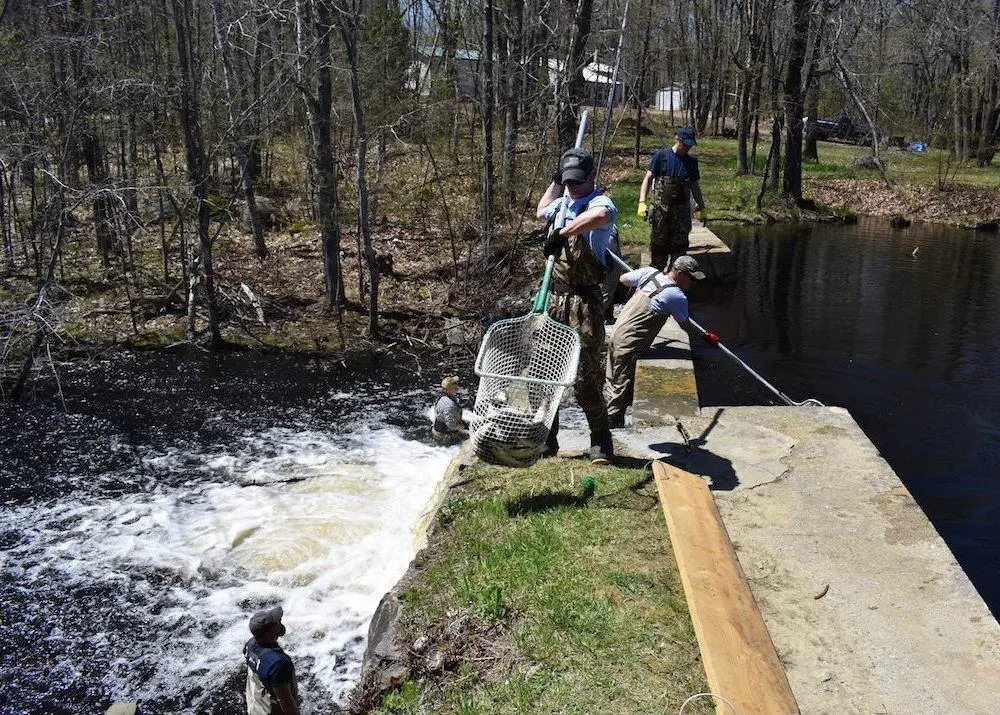
Togus Stream, a tributary to the Kennebec River, once supported populations of critically endangered Atlantic salmon, as well as alewives and blueback herring, collectively called river herring. However, construction of barriers has blocked these species from historical habitat for more than 200 years.
“Togus stream has the most and best Atlantic salmon habitat below mainstem dams on the Kennebec River and has the potential to support runs of over 300,000 river herring annually into Togus Pond,” said DMR Sea Run Fisheries director Sean Ledwin.
Three-year project
The three-year restoration project will involve Atlantic salmon egg planting at three locations in Togus Stream, installation of a fish way at Lower Togus Pond Dam, and removal of two small stone dams located downstream of Lower Togus Pond Dam.
Improved river herring runs provide numerous benefits including the increased available of food for predators such as eagles, osprey, and striped bass during juvenile salmon outmigration to the ocean, which improves the chances of survival for salmon juveniles.
“We believe that restoring all these species will lead to more successful Atlantic salmon recovery by reestablishing their ecological roles in relation to each other,” said Mr Ledwin.
“Stocking eggs into a river has proven to be a successful way to promote recovery of Atlantic salmon. Access to habitat is equally vital for restoration of species like Atlantic salmon and river herring which spawn in fresh water and migrate to and from saltwater.”
Related Articles
 FISHERIES
 FISHERIES
 WORLD FISHING EVENTS