



Marine organisation, Oceana, has highlighted that litter and fishing gear has been found among new species in major European seamount, the Gorringe bank.
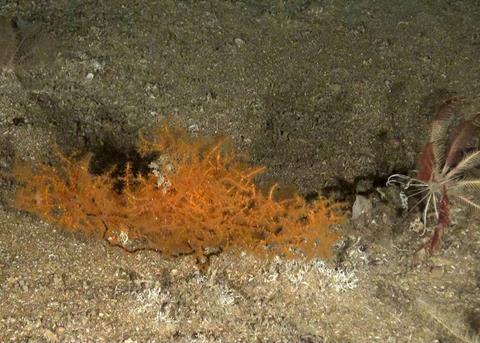
The Gorringe bank sits 250km off the Portuguese coast and rises from a depth of 5,000m to 30m below the surface. In collaboration with researchers from the University of Algarve, Oceana has identified hundreds of new species including deep sea sharks, hydrocoral, glass sponges and black coral.
Although some areas remain untouched, some are already strongly affected by human activity, with abandoned fishing gear, such as creels, fishing lines, nets and ropes. Oceana is calling for the bank's protection.
Ricardo Aguilar, research director, Oceana Europe, told World Fishing & Aquaculture: “Seamounts are ‘hotspots’ of biodiversity but can also act as ‘stepping stones’ connecting species and habitats from different regions. United Nations General Assembly recognised the importance of these features naming them as Vulnerable Marine Ecosystems, and asked governments to take action for protecting them.”
He added: “Gorringe is still quite pristine, but is starting to suffer from marine debris, garbage and lost fishing gears impacts. As a first step, it would be necessary to implement United Nations resolutions to protect seamount from human impacts. It must be also included in the EU network Nature 2000 of protected areas, but also under the OSPAR Convention for the protection of the Northeast Atlantic.”