



The solvent-free oil extraction technology developed for krill by Chilean-based consultancy Tharos has spread beyond the original industry.
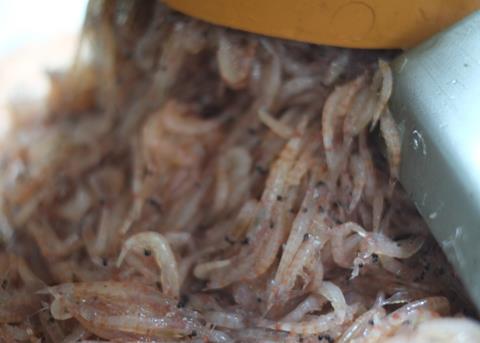
Interest from fish farming and fishing companies to get a license to operate the technology has led to Tharos expanding its business model.
“Interest from aqua farmers and fishing companies looking for ways to add value to their once discarded offal and bycatch opened new business opportunities”, says Tharos CEO Dimitri Sclabos.
Developed for use at-sea, Tharos tested the technology onshore throughout 2015 and confirmed that it is also suitable for use on land.
“The market will grab the power of this technology,” Mr Sclabos says. “It will provide the much awaited 100% solvent and chemical-free clean marine oil with unique freshness parameters, and no oxidation.
“This low cost technology will primarily work with offal, sourcing marine oils high in valuable compounds such as phospholipids, triglycerides and astaxanthin. In addition, the process provides dried meal, a powerful attractant used in special aqua-feeds, and also high quality proteins.”
Mr Sclabos says there has been constant interest in technology that generates value from species not used for direct human consumption.
“We estimate that 30-40% of fish harvested are either discarded, or are mostly ingredients for feed applications,” he says. “We target high-priced ingredients for human health, supplements and pharma applications.”
Tharos is looking to other species in addition to krill because of the tonnage involved. Mr Sclabos says, “In the South Antarctic krill fishery, krill oil still has a very minor share of the annual output of all the products manufactured. It has even much less when compared with oils such as sardine and anchovy oils, both species predominantly caught in South Pacific waters.”
Nonetheless, accounting for only around 1% of the annual South Antarctic krill production, krill oil remains crucial for several fishing operations. In some cases it contributes around 40% of their annual revenue.
Profit
In fact krill oil helps CAPEX (capital expenditure) intensive and complex at-sea operations make a profit.
And this profit generating ingredient comes closely aligned with two other krill products – whole frozen krill and dried krill meal, which together constitute more than 95% of the South Antarctic annual krill output.
Both products are currently manufactured onboard trawlers fishing in the South Antarctic. Meal is primarily used as a feed ingredient for aqua-farmed species, while frozen krill is used mostly for fish bait, but also for aqua feeds.
But frozen krill and krill meal play a key role for the krill industry, as some portion of each is converted to krill oil ashore. “All krill oil is currently manufactured on land using solvent-extraction processes from either frozen krill or dried krill meal,” Mr Sclabos says.
Because of where these products are obtained, they are transported long distances to the on-land premises where the oil is extracted. A far cry from the oil being produced at-sea as it would be using the Tharos technology.
Also Tharos claims that the levels of phospholipids (60%), omega-3 polyunsaturated fatty acids (40%) and astaxanthin (1,000 ppm) obtained in krill oil extracted using its technology are all much higher than in most krill oils extracted by existing methods, and costs are very competitive.