


Ireland unveils seaweed research project
Irish researchers have embarked on a project aimed at providing essential data on the cultivation of three popular seaweed species to assist in the growth of the countrys seaweed industry.
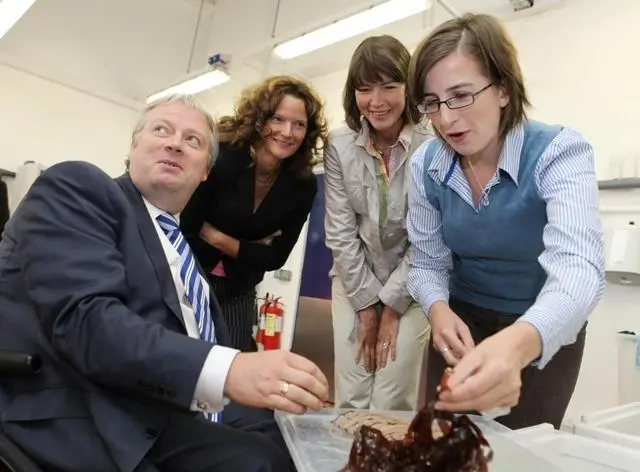
Seaweeds harvested in Ireland traditionally played a role in food products and in fertiliser products, but a new seaweed cultivation project which is a joint collaboration between Bord Iascaigh Mhara (BIM) and the Marine Institute, funded under the Sea Change Strategy and the Marine Research Sub-programme of the National Development Plan, 2007-2013, has demonstrated how this dynamic natural resource can be produced more effectively.
Minister of state at the department of agriculture, fisheries and food, Sean Connick, congratulated the group on their findings. “There is no doubt that Irish seaweed offers great potential and I am looking forward to the group’s final report which will provide the necessary data to enable industry to grow a relatively small niche sector with a current estimated output of €10 million ($13.2 million) annually to an output of €20 million ($26.3 million) by 2013.”
The research group, coordinated by BIM, is a diverse collection of academic and industrial partners including Queen’s University Belfast (QUB) and the National University of Ireland, Galway (NUIG) with close collaboration from Irish seaweed companies: Cartron Point Shellfish Ltd, Tower Aqua products Ltd, Dolphin Sea Vegetable Co, G and B Barge Operators Ltd, Roaring Water Bay Seaweed Cooperative Society Ltd and Cleggan Seaweeds.
BIM’s CEO Jason Whooley outlined how this study would contribute to growth in the sector: “Innovation is key to ensuring that the full potential of the Irish seafood sector is fully realised. Seaweed is an extremely versatile naturally occurring raw material. This study aims to develop and disseminate cultivation techniques for a number of key species. We will be working closely with the companies involved and the wider industry to ensure that the cultivation sector expands to meet market demand.”
During the three-year project, the group aims to grow three valuable species of seaweeds on a pilot or commercial scale in sea sites all around Ireland.
The species being farmed include two red seaweeds ‘dillisk’ (Palmaria palmata), and (Porphyra sp.), or ‘nori’ in Japanese and a brown seaweed ‘kelp’, (Laminaria digitata).
Cultivation of these seaweeds requires a laboratory or ‘hatchery’ phase, followed by an on-growing phase at sea.
Hatchery procedures for all three species are currently being perfected in Portaferry Marine Laboratory, Co Down; Martin Ryan Institute, Carna in Co Galway and the Daithi O’Murchu Marine Research Station at Gearhies, West Cork.
Two and a half years into the project; and the first results are starting to be produced from these sites. In the south-west, Laminaria digitata has been grown successfully on longlines in Roaring Water Bay. The harvesting of these longlines in the near future makes this the first pilot-scale harvest of cultivated Laminara digitata on longlines in Europe.
Typically dried and packaged Laminaria digitata can demand €10-16 ($13.17-21.08) per kg for bulk quantities. This price represents the higher end of the market for this product.
“The aim of the project is to develop and trial industry-scale hatchery and ongrowing methodologies for a number of seaweed species which have been identified as having commercial value, and to transfer that technology to create new business opportunities in seaweed aquaculture.” said Dr Peter Heffernan, CEO of the Marine Institute, which is co-ordinating the Sea Change programme.
Another first for the research group is the successful growth of Palmaria.
In preparation for the on-growing period at sea during winter 2010, the team have been working through the reproductive season to build 1km of seeded Palmaria string, making this the largest concerted effort for growing this species yet.
This is also the first time that Palmaria has been grown using vertically deployed nets as opposed to deployed droppers.
Plants grow very vigorously on the nets to give the appearance of a ‘seaweed curtain’ in the water.
This new technique demonstrates the move away from experimental trials to a larger, more commercially viable method of cultivation. The total biomass produced on these nets will be calculated in the next two months.
Currently wild sourced dried and packaged bulk Palmaria is being sold at €16-19 ($21.08-25.03) per kg.
Porphyra, which is a European ‘nori’, is extensively cultivated in Asia and the dark-red paper-like end product is used for sushi rice wraps. It is the most valuable seaweed food product and highest quality nori can fetch up to €162 ($214) per 100g of toasted nori sheets.
Porphyra has a complicated life cycle, which makes it a potentially more difficult and more expensive species for aquaculture.
No native Irish species have ever been tested before in cultivation trials. During this project, a native species is being tried in the north for potential cultivation in Strangford Lough.
These are the first trials of its kind in Ireland and the UK. However, more research is needed to establish this native Porphyra species for large-scale aquaculture.
Related Articles
 FISHERIES
 FISHERIES
 WORLD FISHING EVENTS