





A meeting aimed at reducing the overfishing of bigeye tuna in the Atlantic has ended with no breakthrough in sight.
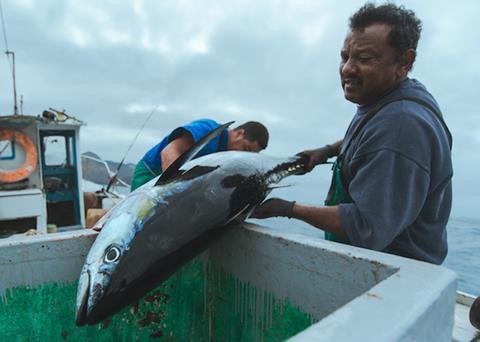
Proposals put forward at the International Commission for the Conservation of Atlantic Tunas (ICCAT) meeting held in Dubrovnik, Croatia were blocked by a minority of member countries, meaning that a consensus could not be reached. As a result there will be no effort forthcoming to reduce catches of bigeye tuna as recommended by ICCAT scientists.
Adam Baske, policy and outreach director for the International Pole and Line Federation (IPNLF) which aims to bridge the gap between demand and supply of tuna, was disappointed.
“Despite more than a week of long negotiations all we were left with were empty words,” he said.
“People say that the ICCAT has failed but the commission is merely the body that reflects the will of its members. Some clearly don’t care about the future of this fishery because it’s not their target species. Its shows that the ICCAT is completely incompetent when it comes to the effective management of tropical tunas,” he added.
The ICCAT represents more than 50 countries and a number have expressed concern not only about bigeye tuna overfishing, but the recovery of bluefin tuna, mako sharks and blue marlin. A concerted effort was made by representatives from South Africa, the EU and Guatemala to develop a unified proposal.
Whilst a majority wanted to see measures implemented such as improved management, reductions on FAD fishing and adding new countries to the quote table, the veto by a minority of members means that the future of stock levels can not be guaranteed, threatening the communities that depend on this resource.