

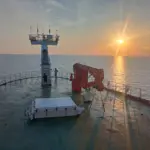




International interest in Australian e-monitoring program
The Australian Fisheries Management Authority’s (AFMA) electronic monitoring program is continuing to draw international interest, most recently from Taiwan.
E-monitoring uses an onboard system of sensors and video cameras to monitor fishing activities and catch, and been operational in the Eastern and Western Tuna and Billfish, Small Pelagic, and Gillnet Hook and Trap fisheries since July 2015
Taiwan is developing an e-monitoring system and is seeking expert advice before taking its program further, so the Vice-Director of the Fishing Boat Research Centre from Taiwan’s Department of System and Naval Mechatronic Engineering in National Cheng Kung University travelled to Australia to see first-hand the benefits of e-monitoring. While in Australia, the representative was shown how the program is run at AFMA.
The trip included visits to AFMA’s e-monitoring service provider Archipelago Asia Pacific to see how footage is analysed and processed and to Ulladulla to see e-monitoring in operation on two Commonwealth tuna vessels. The representative was very impressed with the quality of the e-monitoring system used by AFMA and saw it being useful for both government regulators and the fishing industry.
The Taiwanese trip follows a visit last year from Papua New Guinea, the Solomon Islands and the South Pacific Community based in Noumea, who are also considering adopting e-monitoring for use in their fisheries.
AFMA’s acting executive manager fisheries, George Day, said it was pleasing to see the continued level of international interest in e-monitoring.
“E-monitoring is just one of the tools that AFMA is using to support managed fisheries throughout the Western and Central Pacific Ocean,” Mr Day said.
“We will continue to work with our international counterparts to share information on the latest technology that can be used to support sustainable fisheries management globally.”
Related Articles
 FISHERIES
 FISHERIES
 WORLD FISHING EVENTS