






Industry takes action on IUU fishing
The fight to put an end to illegal, unreported and unregulated (IUU) fishing is growing, with more countries ratifying an international agreement on ‘Port State Measures’.
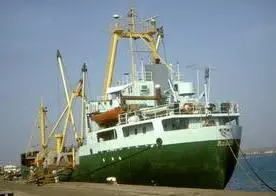
According to the FAO, illicit fishing, which includes operating without authorisation, harvesting protected species, using outlawed fishing gear and violating quota limits, may account for up to 26 million tonnes of seafood a year, more than 15% of the total global output. It’s also estimated to strip between US$10bn and US$23bn from the global economy, and their impacts undermine the way fish stocks are managed to make it a double concern around the world.
To help tackle the problem, Food and Agriculture Organisation of the United Nations (FAO) brokered the adoption in 2009 by its Member countries of the ‘Agreement on Port State Measures to Prevent, Deter and Eliminate Illegal, Unreported and Unregulated Fishing’.
“The Agreement aims to harmonise port controls in order to prevent illegally caught fish from ever entering international markets through ports,” said Blaise Kuemlangan, chief of FAO’s Development Law Service.
The Agreement promotes collaboration between fishermen, port authorities, coast guards and navies to strengthen inspections and control procedures at ports and on vessels. Importantly, it also allows states to prevent the landings of catches derived from IUU fishing by vessels regardless of the flag they fly.
“The ability to turn away vessels taking part in IUU fishing will greatly reduce opportunities for selling their catch, decreasing IUU fishing worldwide,” added Mr Kuemlangan.
To help countries in building their capacity to implement the Agreement, FAO has set up a series of workshops in all world regions.
The sixth in the series, funded by the Government of Norway and covering West Africa, ran this month in Praia, Cabo Verde. Fifty participants from 16 African coastal countries took part, along with experts from the European Union, the International Maritime Organisation, the North East Atlantic Fisheries Commission, the International Commission for the Conservation of Atlantic Tunas, the COMHAFAT Ministerial Conference on Fisheries Cooperation Among African States Bordering the Atlantic Ocean, the Pew Charitable Trust and the WWF.
“Many countries in the region have the will to address IUU fishing, but require the most cost-effective tools and an understanding about how these can be implemented at the legal, policy and institutional level,” said Remi Nono Womdim, FAO Representative in Cabo Verde.
The agreement comes into force when 25 countries have deposited their instrument of ratification, known as acceptance of accession. So far 12 countries have done so: Gabon, Chile, the European Union, Iceland, Mozambique, Myanmar, New Zealand, Norway, Oman, the Seychelles, Sri Lanka and Uruguay. Two more states will soon join them.
FAO says the Agreement will also enable better compliance with the 1995 FAO Code of Conduct for Responsible Fisheries, which seeks to promote the long-term sustainability of the sector.
Related Articles
 FISHERIES
 FISHERIES
 WORLD FISHING EVENTS