



Australia’s National Seafood Industry Alliance has issued a statement saying that the fishing industry cannot support the proposed Commonwealth Marine Reserves Network (CMRN) in its current form.
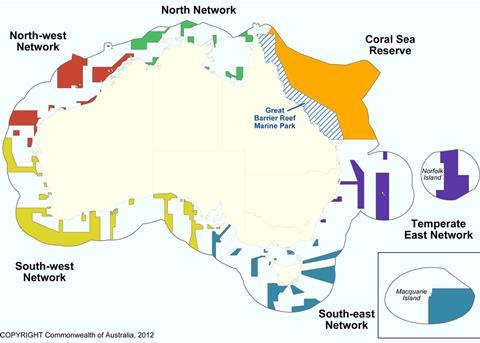
The Alliance believes that the Government’s proposal “places an unjust burden on Australia’s fishing industry and regional communities, with no proper calculation of the impacts.” It says that changes must be made to the Government’s plan, otherwise businesses will fold, jobs will be lost and those remaining in the industry will be hit with higher fees to cover fisheries management costs.
“The issue here is not marine biodiversity. The Australian fishing industry supports biodiversity conservation – without it, there is no future for the industry,” said Grahame Turk, chair of the National Seafood Industry Alliance.
“Fishing co-exists with conservation in Commonwealth waters right now under tightly regulated fisheries management and harvest strategies. The Government’s plan does not get the balance right.”
The commercial fishing industry’s response to the Government’s final version of the CMRN, highlighted not only the negative impacts on the industry, but also fundamental flaws it believes are present in the Government’s calculations and processes.
The Alliance claims that an independent review by Ernst & Young examined the socioeconomic impact assessments produced by ABARES for the Government and concluded that the assessments were inadequate for the task of informing a major new policy.
“For major policy reforms, it should be standard practice to use a full cost benefit analysis,” said Mr Turk. “The Government did not do that. The ABARES studies fail to answer critical questions about the social and economic effects of the marine reserves, including the question of who wins and who loses.”
In addition, an independent review of the Government’s Regulatory Impact Statement (RIS) found critical deficiencies in four of seven elements, and found that the RIS failed to meet the Government’s own guidelines.
“Both reviews found no basis on which to assess whether the benefits of the Government‘s proposal would outweigh the costs,” said Mr Turk.
The Alliance concludes that the marine reserves proposal should not proceed until an evidence base for the costs and benefits to the community and the environment is made available.