



The European Commission has adopted a report on the monitoring of Member States’ implementation of the Common Fisheries Policy (CFP) over the period 2003-2005.
The report covers both the conclusions of the Commission’s inspection missions in the Member States to evaluate their control procedures, and an analysis of the implementation reports submitted by the Member States.
The report concludes that while significant progress was observed over the period, the control situation remained in general unsatisfactory. The Member States did not deploy sufficient human resources to ensure control of the CFP measures, they did not take adequate action to guarantee the quality of the inspections which they carried out, and only a few Member States had put in place strategies to optimise the use made of the means which were available to them.
“Despite some real progress in recent years, more effective enforcement will require greater commitment and determination by the Member States. Stakeholders, too, have a crucial role to play in encouraging compliance with the rules especially at a time when they are having a greater say in their preparation”, Joe Borg, European Commissioner for Fisheries and Maritime Affairs, commented.
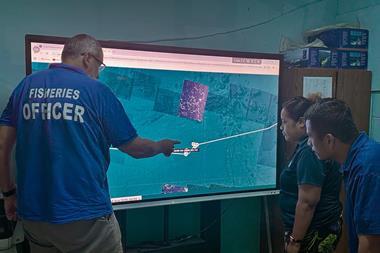
During the period 2003-2005, the Commission’s own inspection missions focused on a number of sensitive areas. These included fisheries targeting stocks which are subject to recovery and other long-term management plans, and the use of satellite-based vessel monitoring systems (VMS). The inspection missions highlighted a number of serious shortcomings and discrepancies in the way the CFP was implemented, including lack of sufficient inspections and failure to cross-check VMS data with that recorded in vessels’ logbooks. Among the consequences observed were continued use of banned gear, such as driftnets, and major discrepancies between declared and observed catches, for example in the Baltic cod fishery.