



The UK’s National Marine Aquarium has confirmed that the Scylla Reef, an artificial reef close to Whitsand Bay in Cornwall, has suffered significant damage following illegal fishing.
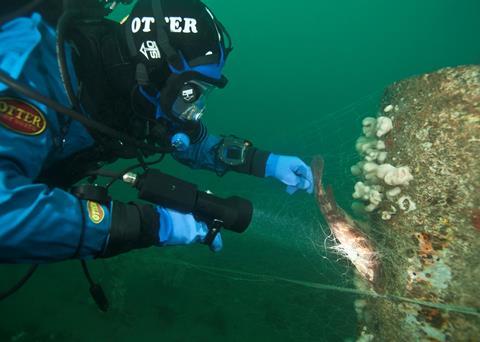
It is thought that the 100m fishing net may have been illegally set close to the reef by unlicensed fishermen, before drifting onto the renowned conservation site, destroying a large section of the reef - which has recently been nominated as a marine protected area.
The Plymouth based National Marine Aquarium, which has been involved with managing the reef since it was first sunk in 2004, is concerned that some uncommon species have now been destroyed and may take many years to return.
Dr David Gibson, the Aquarium’s managing director said, “We are horrified by the extent of the damage which has been caused on the reef, and by the lack of care and attention as a result of irresponsible fishing practices. It has taken eight years to establish such a diverse community of marine life on the reef, something that is likely to take just as long, if not longer, to recover and return.
“We know that licensed fishermen are not to blame for the net, but we are working closely with our colleagues at Devon and Severn Inshore Fisheries and Conservation Association (IFCA), the Marine Management Organisation and the Queen’s Harbour Master Plymouth to try to establish why this has happened and who is responsible."
A joint education programme is being organised between the team at the Aquarium and the IFCA to highlight the significance of the site and help prevent similar issues in the future.