


Iceland hits back over mackerel
Iceland has responded to Scotland’s accusation that its government is undertaking a “cynical propaganda exercise” by attempting to drive a wedge in the UK seafood industry with regards to the mackerel dispute.
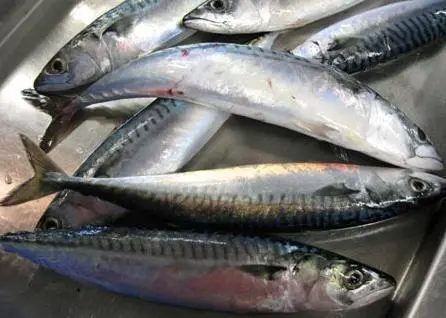
The Scottish Pelagic Fishermen’s Association released a statement this week claiming that a briefing being held today by the Embassy of Iceland in London and Iceland’s Ministry of Industries and Innovation was a bid to try and gain support for the “massive unilateral increase” in its north-east mackerel quota without any international agreement.
The dispute stems from Iceland setting a mackerel quota for 2012 of 145,000 tonnes, which the EU and Norway believes is putting the health of the stock in jeopardy. The Faroe Islands also set itself a quota which was so large that the SPFA says it had to invite foreign vessels to catch the stock on their behalf.
This led to the EU agreeing a sanctions package against both Iceland and the Faroes, which has caused fish processors in Grimsby and Hull to fear that they may lose access to Icelandic whitefish supplies, such as cod and haddock.
Ian Gatt, SPFA chief executive, says the Icelandic Government is now trying to take advantage of these concerns with this briefing in a bid to create a split in the UK seafood industry.
“We believe the Icelanders will use the briefing session to claim that they are committed to sustainable mackerel fishing. This is a quite ludicrous assertion as their approach from the outset has never been to put the health of stock first for the benefit of all participants in the fishery, but instead hold it to ransom for their own advantage and without any due concern to the potential damage being inflicted upon it.
“The EU and Norwegian negotiating teams have made several fair offers during the protracted negotiation process, but these have been rebuffed each time with Iceland and the Faroese being totally intransigent and showing absolutely no intention of trying to seek a reasonable compromise,” he said.
Iceland fights back
However, Iceland is concerned that it’s voice in this debate has largely not yet been heard – with the emphasis so far on the other Coastal States. The Icelandic Government is keen to point out that it had proposed that all mackerel fishing Coastal States significantly reduce next year’s catch by 15-20% to align with scientific guidance from the International Council for the Exploration of the Sea (ICES), but no agreement was reached.
Benedikt Jonsson, Ambassador of Iceland to the United Kingdom said:
“We are meeting with the Grimsby seafood industry and area residents to discuss the need for mackerel fishing countries to reach a compromise on fishing quotas. Icelandic fishing imports play an essential role in the Humberside economy, with 300,000,000 pounds of Icelandic seafood generating millions of pounds sterling in trade.
“For several years, Iceland has worked hard to reach an agreement with the so-called Coastal States of Norway, the Faroe Islands and the EU, including Scotland, which will ensure we all catch mackerel at sustainable levels. We have repeatedly offered proposals that sustain the mackerel population and ensure a fair outcome for all countries. Unfortunately, certain countries have responded with attacks on Iceland and threats of sanctions, while simultaneously demanding a vastly oversized portion of the mackerel catch. Their actions are harming the mackerel stock and fail to support the seafood industries of the Coastal States.
“The facts are clear: Icelandic fishing is generally recognised as sustainable and responsible. And our fishing industry has a large direct impact on the economy of England, as recently recognised by Austin Mitchell MP, who said that a ban on Icelandic fish would be “unacceptable” and that the United Kingdom should not do anything that imperils Icelandic imports. We recognise the importance of Icelandic seafood to England, are eager to negotiate a fair solution, and look forward to other countries joining us at the table to resolve the mackerel fishing issue.”
Related Articles
 FISHERIES
 FISHERIES
 WORLD FISHING EVENTS