


Iceland’s Marine Research Institute has issued its recommendations for the 2021-22 quota year, providing its recommended catch limits for around 30 species.
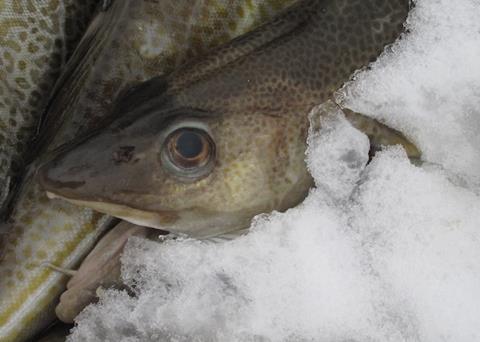
The Institute is recommending that the cod quota for 2021-22 should be cut from this year’s 256,593 figure to 222,737 next year, a 13% reduction based on the fact that the 2013 and 2016 year classes are weak and as the bulk of the cod stock consists of 4-9 year cod, there are two weak year classes of six. The Institute also states that the cod stock’s size has also been over-estimated.
Despite this, the Institute states that the cod stock remains strong, while fishing effort is practically at a historical low point.
The advice for haddock is an 11% increase to a 50,429 tonne quota, while the recommendation is for a 1% reduction in saithe catches to 77,561 tonnes.
The Institute’s recommendation is for a 17% reduction on catches of golden redfish to 31,855 tonnes, and an increase of 13% for Greenland halibut to 26,650 tonnes.
The Icelandic summer-spawning herring has gained strength in recent years, following the stock having been in a weak state after 2008 due to poor recruitment and repeated parasitic infections. But the strong 2017 year class now comes into play and the Institute’s advice is for a 104% increase in this fishery, to 72,239 tonnes for the 2021/2022 quota year.
While the Marine Research Institute provides its annual recommendations, the final decision for setting quotas rests with the Ministry of Fisheries. In recent years, Ministers have tended to stick closely to the Institute’s advice.