






The International Commission for the Conservation of Atlantic Tunas’ (ICCAT) decision to approve 20% annual increases in catches over three years of Atlantic bluefin tuna has come under fire from conservationists.
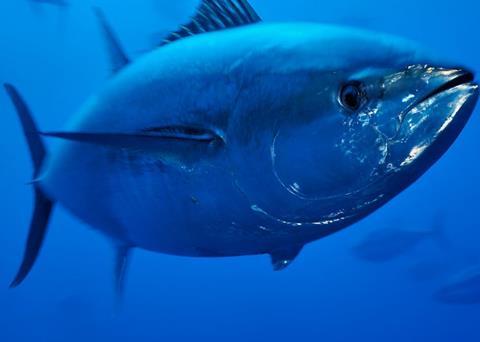
With the agreed increase taking the catch from 13,500 tonnes in 2014 to 19,296 tonnes in 2016, and quotas for 2017 initially set at 23,155 tonnes, WWF Mediterranean says the increase is “too rapid”, especially since little progress has been made to strengthen traceability in the fishery.
“It might seem a paradox, but the bluefin tuna case confirms that sometimes it’s more difficult to manage a success than a crisis,” said Dr Sergi Tudela, head of fisheries, WWF Mediterranean. “We are concerned that the huge conservation efforts of the least years might quickly fade away.”
Current signs of an ongoing recovery in the bluefin tuna population in the East Atlantic and Mediterranean have generated “over-optimistic expectations”, added WWF.
Elsewhere, Oceana says it’s pleased with the outcome since it falls within scientific limits and reflects incipient stock improvements, but is concerned it’s at the cost of the rest of the species for which the ICCAT is responsible, especially sharks and Mediterranean swordfish.
The European Union proposed the end of shark finning by requiring all sharks to be landed with their fins naturally attached. This was the sixth time in a row that ‘fins-attached’ was discussed in ICCAT, and it was supported by more countries than ever before, with 14 CPCs officially co-sponsoring this year’s proposal. Many CPCs already implement fins-attached in their national fisheries, including Belize, Brazil, Chinese Taipei, the European Union and USA, which combined represent more than 75% of reported shark catches in the Atlantic Ocean. Despite this, the proposal was once again blocked by a minority group led by Japan and China.
“Parties have traded off species, sacrificing sharks and swordfish – fish that urgently need management and are equally important for the livelihoods of coastal communities that depend on ICCAT fisheries,” added Maria Jose Cornax, fisheries campaign manager, Oceana Europe.
“If ICCAT learned anything from its historic near-disaster with bluefin tuna, it should realise that delaying management of other species will inevitably come at a cost,” she concluded.







