



Scientists at Nofima have identified the bacteria that are present in fresh-packed cod and believe that nitrogen should be replaced by high oxygen to retain the quality of the fish.
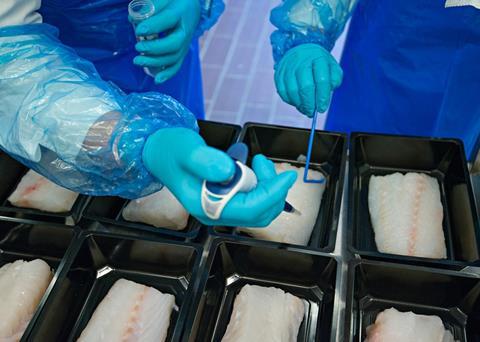
Anlaug Ådland Hansen and her colleagues have found three types of bacteria that are known to be particularly detrimental to cod when it comes to the development of odour and taste.
The most commonly used packaging gas in Norway consists of 60% carbon dioxide and 40% nitrogen, Ms Hansen estimates that the shelf-life in the shops can be increased by up to 20% if the gas is exchanged for high oxygen.
“The amount that accompanies the fish into the packaging depends on the level of cleanliness during production. The production environment affects without doubt the bacteria we find,” said Ms Hansen.
“Packaging the fish with the normal packaging gas does have a certain effect on Photobacterium, but the growth of this bacterium in particular is more strongly inhibited by replacing nitrogen with high oxygen.”
She added: “The packaging gas mixture also has an inhibitory effect on the other bacteria we found in fish, and this means that the industry should now focus on using high oxygen in the packaging process.”
The three bacteria are Photobacterium, Pseudomonas and Shewanella, and all occur naturally in the fish but the amounts of the bacteria that are included with the fish in the packaging before the fish is sent to the shops differ, depending on the quality of the raw material.
Ms Hansen continued: “The knowledge we have gained from this project leads me to believe that the current practice of stating a shelf-life of 10 days is somewhat exaggerated.”
“In contrast, the use of high oxygen has the potential to increase shelf-life. In the best case, with low initial levels of bacteria in the raw material and packaging using high oxygen, a shelf-life of 12 days can be achieved.”
The new information has been gained in a large research project about live storage, CATCH. The programme is financed with NOK29m (US$3.3m) from the Sustainable Innovation in Food and Bio-based Industries programme from the Research Council of Norway.