



Greenpeace is urging tuna traders and investors to “start behaving ethically” to ensure a sustainable future for the stock and market after Western and Central Pacific Fisheries Commission (WCPFC) talks failed.
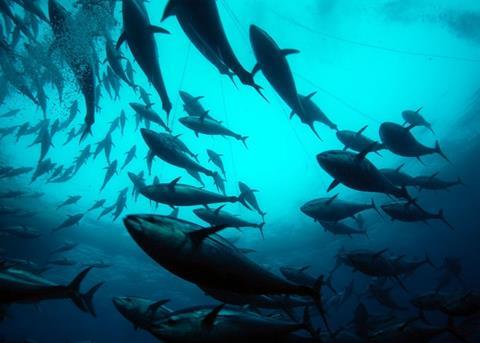
The WCPFC met in Samoa for the 11th session last week, but failed to agree on urgently-needed rules to manage Pacific tuna fisheries and give the stock time to recover from overfishing, despite last year’s record-high catch of bigeye tuna by purse seiners using FADs, and the latest stock assessment revealing overfishing has driven the stock down to just 16%.
“Bigeye tuna are overfished, albacore fisheries are no longer profitable, and yellowfin and even skipjack tuna are starting to buckle under the strain of a fishery out of control,” said Lagi Toribau of Greenpeace Australia Pacific.
“The governments represented on this Commission, need to be held accountable by their people. The commission failed to pass a single one of the proposals put forward by Pacific Island Nations to save these fish – and the fisheries that depend upon them,” he added.
Greenpeace says the Commission’s failure to agree is also taking its toll on the region’s albacore fisheries. And China isn’t helping matter, once again refusing to cap it’s fishing of South Pacific albacore after building up to 100 more longline vessels in 2013, despite the declining stocks driving Pacific fleets out of business.
While Pacific countries tried to take matters into their own hands – agreeing the Tokelau Agreement to work together to manage South Pacific albacore – distant water fishing nations did not join the effort at the WCPFC, leaving the group high and dry.
Now, Greenpeace says international tuna brands should ensure their suppliers are not involved in driving Pacific fisheries’ collapse, “nor should they partner with distant-water fishing powers that expand their longline fleets or plunder bigeye using FADs, while blocking conservation rules from being adopted”.
Sharks are also in trouble as the Commission failed to adopt proposals from the Pacific and European Union that would have clamped down on shark finning. Mr Toribau said: “Tuna brands must start behaving ethically and guarantee consumers that their supply chains don’t produce shark fins as well as tuna cans.”
“In the absence of real leadership, industry and traders are running Pacific tuna fisheries into the ground. Supporting sustainability protects their viability, and we’re going to start holding them to account if they don’t,” Mr Toribau concluded.