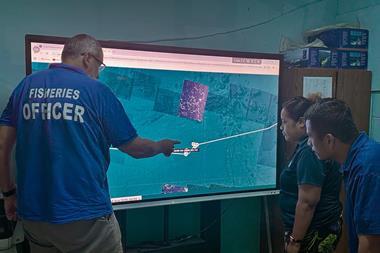




Greenpeace welcomes the decision of the eight Pacific Island countries that are party to the Nauru agreement (PNA countries) to set aside more than 4.5 million square kilometers of international waters in the Pacific as off-limits to purse seine fishing for tuna.
This decision, when implemented in January 2011, will represent one of the largest ocean protection moves in history, according to the international environmental group.
“The Pacific Island Countries are showing exceptional and much needed leadership in defending our oceans at a time when it is needed most,” said Lagi Toribau, oceans campaigner with Greenpeace Australia Pacific.
In addition to these proposed areas, the PNA countries previously pushed for almost complete protection of two large high seas areas in the western part of the Pacific Ocean. They have also taken progressive steps to reduce the use of fish aggregation devices (FADs) by fishing operations. Purse seine fishing using FADs results in large amount of unwanted bycatch, including juvenile tuna, sharks and turtles: rendering its canned tuna products unsustainable. These FADs are partly responsible for the sharp decline in valuable bigeye and yellowfin tuna stocks in the Pacific.
“Time and tuna are running out and East Asian fishing nations must now agree to these proposals at the West and Central Pacific Fisheries Commission meeting in December and close the high seas enclaves of the Pacific to all fishing activities,” said Sari Tolvanen, Greenpeace International oceans campaigner.
“The necessary next step to ensure sustainable fisheries in the Pacific region is for the PNA to extend the closures in the international waters to also include longline fishing for tuna and to totally ban purse seine fishing using FADs,” added Toribau. “The region is well placed to reap large economic and environmental benefits by embracing sustainability as market demand for sustainable tuna products is high.”