
A few weeks ago, British television carried a story stating that supermarkets should be forced to pay for the disposal of the packaging on the food products that they sell.

The reasoning behind this was that customers throw away this packaging when they consume the products inside. The packaging eventually goes into landfill sites and we are fast running out of space in which to bury our rubbish.
This is the latest example of the increasing influence of the environmental or 'green' movement.
Two years ago I wrote an article in which I said that this movement is gaining momentum so quickly that every sector of the seafood processing industry needs to take action if processors are to stay in business.
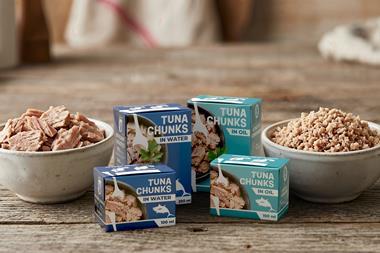
This statement may seem extreme. But is it? Take a look at the packaging that goes around food products. There is usually a printed message on the outermost layer which says that at least some of the packaging is biodegradable often with an apology if some of it is not.
Eventually, of course, all packaging will have to be biodegradable or re-usable. For food products, this requirement will be passed all the way along the chain from the retail or catering outlet to where the constituents of a product are sourced. For seafood it will go right back to when the fish or shellfish are taken out of the water. All containers/packaging from this point onwards will have to conform to strict regulations.
For at-sea processors this means that block liners and any other packaging they use cannot end up in landfill sites. And on land the days of the universally used expanded polystyrene boxes for transporting fish are numbered, or else another use for the boxes has to be developed, and quickly.
For processing itself, the sources of energy used to power equipment will need to be changed from fossil fuels to those that are renewable. This, of course, will become an economic as well as an environmental necessity.
Fishermen have recently suffered from sky-rocketing oil prices so they know what to expect on the fossil fuel front – we may be experiencing a lull right now, but when the recession has ended there is only one direction in which oil prices are going to go, and that is up.
It is difficult to predict the long term effects of environmental issues on processing fish and shellfish at sea. However, at-sea processors score heavily on quality. There is no doubt that fish taken out of the water and frozen within six hours of being caught, as multiple retailer Marks & Spencer used to boast for its frozen at sea products, is of better quality than so-called 'fresh' fish which has spent days at sea before being landed, and then more on the back of a lorry before being processed (and there are serious environmental issues connected to land transport, of course!).
What we do know for certain is that processors have got to plan ahead because the environmental movement is here to stay and sooner or later it will affect everything that we do.