



The Humane Slaughter Association (HSA) has announced grant funding of GB£166,000 to investigate the potential for improving the welfare of wild-caught fish at slaughter.
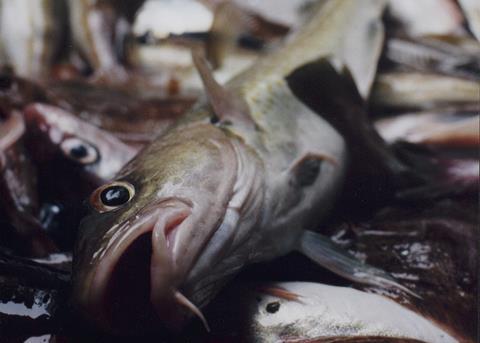
This funding has been awarded to Dr Nicola Randall, director of the Centre for Evidence-Based Agriculture at Harper Adams University in Shropshire, UK, to carry out a global systematic review into humane capture and slaughter of fish caught on a commercial scale in the wild for food.
Dr Randall said: “We will use a systematic mapping technique to provide an overview of available evidence, and to identify gaps in knowledge.”
Led by Dr Randall, a team will collate and analyse existing information and data across a broad spectrum: from methods of capture and killing to location and number of fish caught. The results, together with expert evaluation, will be used to inform a feasibility analysis of which fishing system, species of fish, geographical fishing area, etc is most likely to be suitable to the adoption of commercially viable stunning of wild-caught fish. The research will also consider the sustainability of such methods (economic, environmental, ethical and social considerations including practicality).
Dr Randall added that the ‘systematic mapping’ technique “follows structured predefined methods to reduce bias, and increase the transparency of our work”.
The research is a key part of the HSA’s plan “to explore the possibility that wild-caught fish might be humanely stunned in a similar, commercially-viable way to many farmed fish,” stated Dr Huw Golledge, CEO and scientific director.
The project will start this month and is expected to take two years to complete.