



Large amounts of fishing gear lost at sea or abandoned by fishers are hurting the marine environment, impacting fish stocks through ''ghost fishing'' and posing a hazard to ships, according to a new report jointly produced by the UN Food and Agriculture Organization (FAO) and UN Environment Programme (UNEP).
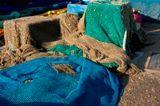
According to the study, the problem of abandoned, lost or otherwise discarded fishing gear (ALDFG) is getting worse due to the increased scale of global fishing operations and the introduction of highly durable fishing gear made of long-lasting synthetic materials.
The report estimates that ALDFG in the oceans makes up around 10 per cent (640,000 tonnes) of all marine litter.
Most fishing gear is not deliberately discarded but is lost in storms or strong currents or results from 'gear conflicts', for example, fishing with nets in areas where bottom-traps that can entangle them are already deployed.
The main impacts of abandoned or lost fishing gear are:
• Continued catches of fish - known as ghost fishing - and other animals such as turtles, seabirds, and marine mammals, who are trapped and die
• Alterations of the sea-floor environment
• The creation of navigation hazards that can cause accidents at sea and damage boats
The report makes a number of recommendations for tackling the problem of ghost nets:
Financial incentives - Economic incentives could encourage fishers to report lost gear or bring to port old and damaged gear they might recover accidentally while fishing.
Marking gear - Marking should be used to better understand the reasons for gear loss and identify appropriate, fishery-specific preventative measures.
New technologies - New technologies offer new possibilities for reducing the probability of ghost fishing.
Improving collection, disposal and recycling schemes - It is necessary to facilitate proper disposal of all old, damaged and retrieved fishing gears, according to the report.
Better reporting of lost gear - A key recommendation of the report is that vessels should be required to log gear losses as a matter of course.