


Women play a crucial role in Ghana’s fisheries and the current crisis in the country’s fish stocks cannot be fully solved without their input in decision making, says a report released by the Environmental Justice Foundation (EJF) and partner Hen Mpoano.
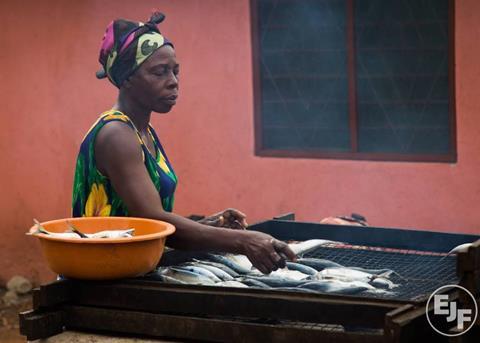
The new report, released today on International Women’s Day, highlights the powerful roles of women in Ghana’s fisheries. Women own canoes and finance fishing trips by paying for fuel, and in the Greater Accra and Volta regions, women are out on the river with the men, fishing and catching clams.
The Konkohemaas – queen fishmongers – preside at the landing beaches, speaking on behalf of the other women to negotiate the price of fish, or mediate issues with fishermen. By funding fishing trips, women have traditionally secured themselves a portion of the catch. But now, with fish stocks at crisis point, old community relations are fraying, and fish instead go to the highest bidder.
Women play a key role in the fisheries and stand to lose just as much from the crashing fish stocks, yet they have little control or even input over fishing practices.
Collective action is required to improve the state of Ghana’s fisheries, the report states, and that means women’s voices are needed in discussions about the future.
“Fully including women in fisherfolk organisations, community meetings, and technical plans is not only fair, but sound judgment, given the scale of the problem facing Ghana’s fisheries,” said EJF’s executive director Steve Trent.
“Communities need to move away from destructive practices – and unify against illegal industrial tactics, such as saiko. This kind of behavioural shift requires the widest range of experience and perspectives. Giving a full and equal role in fisheries management is paramount.”
Recognising that gender equality and environmental regeneration are intimately linked, the Far Dwuma Nkɔdo Project, initiated by EJF and Hen Mpoano in 2017, has been working with local fishing communities to give marginalised women’s groups a greater say. One such group is the National Fish Processors and Traders Association (NAFPTA), which was formed by the West Africa Regional Fisheries Programme as an important first step in bringing women together to demand better representation.
Far Dwuma Nkɔdo’s report calls for the strengthening of NAFPTA at both national and community level. Increased use of Village Savings and Loans Associations could create a buffer for the low season and provide emergency relief – for school fees and sickness costs, for example. Along the beaches, women should be encouraged to become actively involved in the fight against illegal fishing. And crucially, fishing regulations must be closely observed to restore the powers of the Konkohemaas.
“Women fisherfolk are a vital part of Ghana’s fisheries,” said Director of Hen Mpoano, Kofi Agbogah.
“We need their input to create the lasting, sustainable change that will save our fish stocks.”