




Israeli scientists have developed a novel method for generating single-sex populations of prawns to both boost the productivity of aquaculture farms and as a biocontrol measure against invasive species and pests.
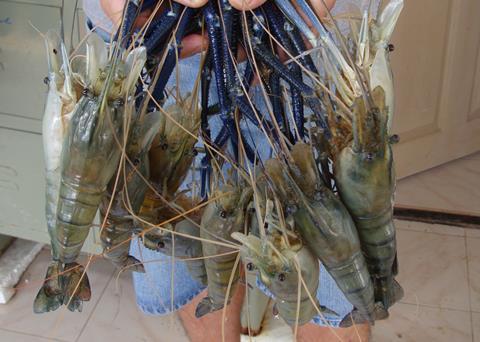
Male sexual differentiation in crustaceans is regulated by the androgenic gland. Removing the androgenic gland in juvenile males causes them to become "feminised" and capable of producing eggs and when these "neo-females" are mated with normal males, the entire offspring is male.
For commercial prawn farms, all-male populations are highly desirable as males are considerably larger than females. But, surgically removing the androgenic gland is not a feasible option for large farms.
Professor Amir Sagi of the Ben Gurion University of the Negev and his colleagues recently found that prawn androgenic glands produce specific molecules known as insulin-like androgenic peptides (IAGs).
Working on giant freshwater prawns (Macrobrachium rosenbergii), they used a technique known as RNA interference (RNAi) to generate populations of neo-females using genetic molecules, similar to naturally occurring ones, which temporarily bind to the target sequence, causing it to be recognised by enzymes which suppress the gene's function. This caused the males to undergo complete sexual reversal until they became neo-females only capable of producing male offspring.
Professor Sagi said: “Besides boosting yields in commercial farms, this technology could also be used to control invasive crustaceans by altering population ratios.”
He also said that these non-reproducing prawns could be used "as sustainable bio-control agents" against freshwater snails that carry diseases or damage rice paddy fields. As these prawns cannot form reproductive populations, there would be no risk of them becoming invasive species themselves.