



Over the last six years, AFMA observers have been involved in a number of at-sea gear trials.
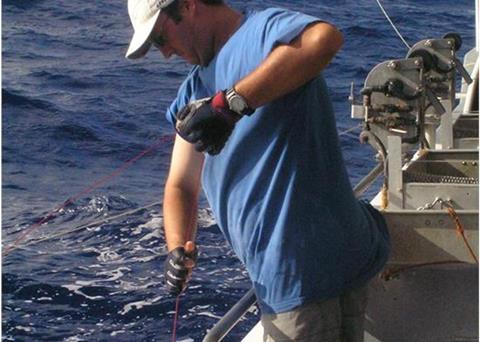
The Eastern Tuna and Billfish Fishery (ETBF) fleet have been very cooperative in their efforts to assist in these trials and in particular the crew of the FV Samurai, which operates from the port of Mooloolaba. The vessel is owned by P&M Williams (NQ) Pty Ltd and is skippered by Nick Williams, a self-confessed technology buff with a lively interest in scientific studies.
The Samurai has been involved in several trials and projects, including the use of temperature depth recorders for CSIRO, a trial of circle hooks for ABARES, a trial of 60g safety leads for the Australian Antarctic Division (AAD) and the use of electronic log books and electronic monitoring for AFMA. During these trials, an AFMA observer has been onboard to record the data and help with the use of the equipment when required.
Currently, a trial of placing 40g fluorescent leads right at the hook is underway onboard the Samurai. These leads have been designed in a collaborative effort by both Nick Williams and Steve Hall, AFMA’s Observer Port Coordinator in Mooloolaba, under the watchful eye of project leader Dr Graham Robertson from AAD.
The project has the scientific and financial support of AAD, including Dr Robertson as project leader. Steve Hall’s job is to liaise with industry in the ETBF and place observers in that fishery. He is also AFMA’s lead observer in many scientific projects that are undertaken on behalf of other agencies such as AAD and CSIRO.
The trial is in the second phase and preliminary data analysis is showing positive results with no change in catch rates of target species and a faster initial sink rate than anything currently in use, which is good news for migratory sea birds. The leads also reduce the need to use light sticks, saving industry money.