



Lobsters from the small-scale, artisanal fishery within the Sian Ka’an and Banco Chinchorro Biosphere Reserves, in the Mexican portion of the Mesoamerican Reef, have been MSC certified.
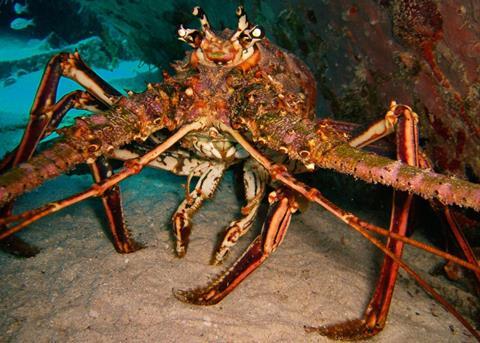
This spiny lobster (Panulirus argus) fishery was certified following an independent assessment conducted by MRAG Americas.
This fishery operates in nearshore waters of the Sian Ka’an and Banco Chinchorro Biosphere Reserves off the coast of the State of Quintana Roo in the Yucatán Peninsula, Mexico. The harvest methods are free diving using ‘Cuban casitas’ in exclusive access parcels within Sian Ka’an and hand harvest in the reefs of Banco Chinchorro.
The fishery is part of the south-central stock of the Yucatán Peninsula, located between Tulum and the Mexico-Belize border.
The client group is the Regional Federation of Fishing Cooperatives in the State of Quintana Roo (Federación Regional de Sociedades Cooperativas de la Industria Pesquera del Estado de Quintana Roo, S.C. de R. L.), on behalf of six lobster cooperatives that fish inside the Sian Ka’an and Banco Chinchorro Biosphere Reserves, and World Wildlife Fund (WWF).
The six cooperatives are Cooperative Society of Fishing Production (SCPP) Pescadores de Vigía Chico, SCPP Cozumel, SCPP José María Azcorra, SCPP Langosteros del Caribe, SCPP Pescadores de Banco Chinchorro, and SCPP Andrés Quintana Roo.
The total combined annual catch for the fishery within the Sian Ka’an and Banco Chinchorro Reserves has been relatively stable at approximately 280mt since the mid-1990s. Lobster from the fishery is currently consumed and commercialised locally, with the majority of the product being sold to area hotels and restaurants.
Jaime Medina-Flores, president of the Regional Federation of Fishing Cooperatives from Quintana Roo, says: “As someone said - success is born when we dare to start - for our fishermen having MSC certification represents more than a success it is a possibility to obtain global support, increasing the benefits from being a responsible and orderly fishery, not only in markets but for our activities and communities.”