



Research on the advantages of flo-ice, presented at a Vigo conference has shown a number of advantages from the first comparative study with traditional ice methods.
A report from the meeting earlier this year, involving the Marine Research Institute in Vigo, the University of Santiago de Compostela and the flo-ice company Kinarca says the aim was to publish results obtained from the research on "optimisation of new technology based on flo-ice". The work was paid for in part by the government of Galicia.
It is argued that the new preservation system offers consumers a food product that loses hardly any of its properties between the point of catch and point of sale. The survey work included microbiological, biochemical and sensorial analyses.
Dr. José Fernández Seara, professor of engineering at the University of Vigo, compared a flo-ice installation with traditional ice formats such as refrigerated seawater (RSW) and flaked ice installations. The results showed the high performance of flo-ice in its cooling capacity, heat transmission factors, surface contact, cooling temperatures, distribution and installation.
Dr. Jorge Barros González from the University of Santiago de Compostela reported on the microbiological and sensorial data which included evolution of the species examined on different days by taking photographic records and samples of the product. The study showed significant differences occurred in the different ice media, for example, sardine, in traditional ice, flo-ice and ozone-treated flo-ice.
Dr. Santiago Aubourg Martinez from the Marine Research Institute in Vigo tackled the same area but from biochemical aspect.
Results
Results showed the "the useful life extension of the sardine studied in the preserving process were as follows:
* in traditional ice, the useful life extension is five days and for those
* in flo-ice the extension rises to 12 days
* in ozone-treated flo-ice to 15 days.
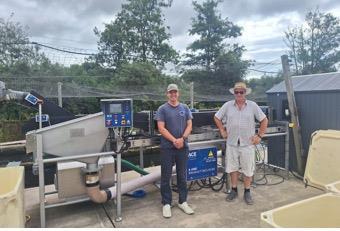
In the case of horse mackerel, the useful life increase was eight and 15 days for the batches stored in traditional ice and flo-ice respectively. For hake an extension of five days was achieved in traditional ice and 12 days in flo-ice. For the fish-farmed turbot the useful life extension obtained was 14 days in traditional ice and 19 days in flo-ice. There were also reports from José Luis Fernandez, the person responsible for engineering at Overberg, about new flo-ice system installations on board vessels.
Related Companies
- Previous
- Next