


Fitco to present copper alloy net at Nor-Fishing
Greek company Fitco produces and markets copper alloy nets to the aquaculture industry and is looking to meet Norwegian and international operators in the maritime sector at Nor-Fishing 2016.
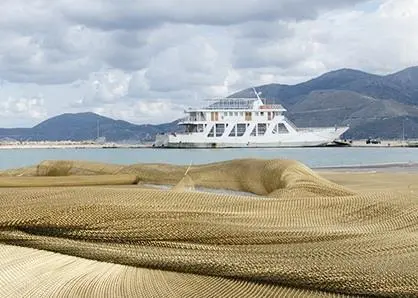
“We believe that many key persons from the aquaculture industry will also attend Nor-Fishing. So we are using every opportunity to spread the word about our new, environmentally -friendly copper alloy net – and we will also be coming back to Trondheim to participate at the aquaculture technology exhibition Aqua Nor next year”, says business development manager, Nick Kotsios of Fitco SA.
In 2013, Fitco’s first pilot fish farming net with copper alloy was tested in the sea, and the following year a new net was launched with a 50m circumference, 10m deep.
“Nets made of copper alloy wire will improve fish health and welfare by giving the fish a cleaner, safer and healthier environment to live in,” says Mr Kotsios.
According to Fitco, experience from testing the first two cages has given some interesting results. UR3O® copper alloy nets:
- Inhibit biofouling and avoid the relevant costs
- Prevent growth of parasites and pathogen bacteria
- Reduce maintenance costs (low cleaning costs, diving operations costs, repair works costs)
- Copper alloy nets are expected to last for more than 10 years
- They give a 15% faster growth of the fish (SGR)
- Lead to 10% improvement in the FCR
- Provide better protection against storms, bad weather and against whales and large predators
Fitco also claims that the nets will maintain a constant net volume – which reduces mortality and stress levels of the fish. In addition, the company points out that the copper alloy nets give increased flow-through of water, increased oxygen levels and important environment advantages.
UR30®
Mr Kotsios explains the advantages of UR30® copper alloy nets: “UR30® copper alloy is a perfect material for aquaculture nets. It is very strong, highly durable, corrosion and wear resistant and prevents algae from growing on the net. Copper slowly releases ions that prevent algae and micro-organisms from growing on the net”, he says.
The natural ability of copper to prevent fouling of the nets is well known, but in spite of this, many aquaculture companies have tried to avoid using copper impregnated nylon nets. The reason for this is that copper particles enter the water during washing of the nets. Fitco refers to reports from the University of Athens, HCMR (Hellenic Centre for Marine Research) and SINTEF, which conclude that copper alloy nets release slowly only insignificant amounts of copper particles – especially when compared to copper impregnated nylon nets. These cupric ions are rapidly dispersed by local turbulence and ocean currents and rapidly bind to natural organic matter in the seawater.
Fitco SA
Nor-Fishing 2016
Stand A2-614
Related Articles
 AQUACULTURE
 AQUACULTURE
 SEAFOOD