




Fishing study reveals scallop fishing impact
Sustainable scallop fishing within the Cardigan Bay Special Area of Conservation (SAC) could be possible, thanks to the world’s largest ever fishing impact study led by scientists from Wales’ Bangor University.
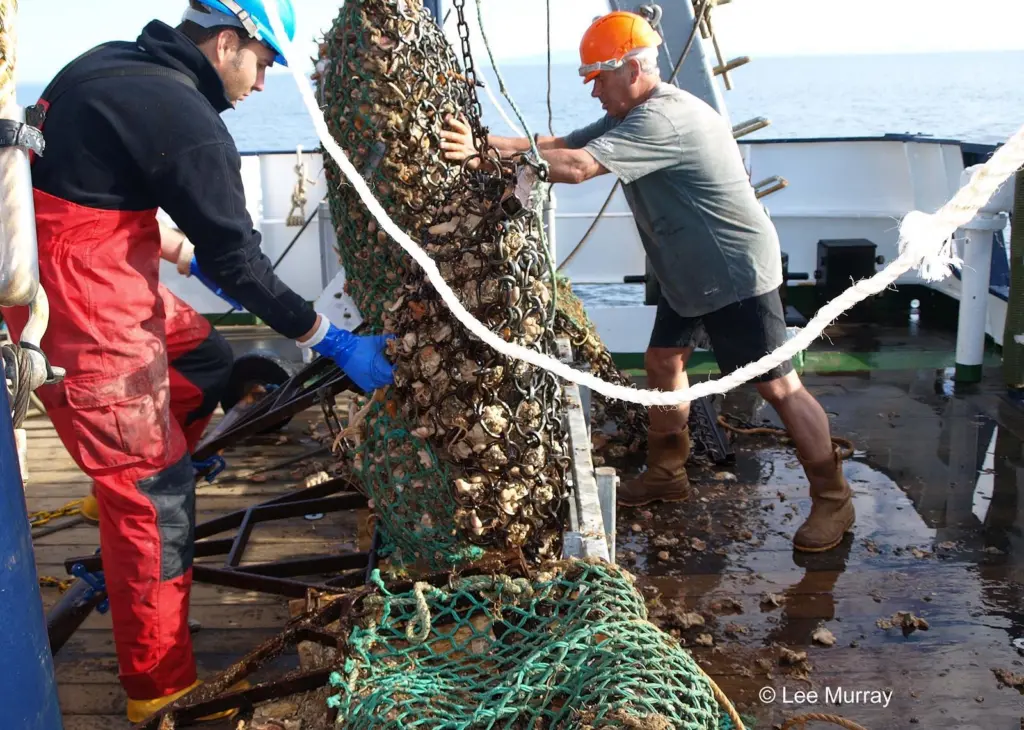
Bangor University worked together with the Welsh Fishermen’s Association, Welsh Government and Natural Resources Wales for the study, which focused on understanding the amount of scallop fishing within the SAC that would be considered sustainable and that would not damage the conservation features of the area.
“This is the first study of its kind that provides information that would enable us to advise on the amount of fishing that the seabed within the SAC can tolerate, it provides the basis for a truly ecosystem based approach to management of a potential fishery in the area,” said Professor Michel Kaiser who leads the fisheries and conservation science group at Bangor University’s School of Ocean Sciences.
The team spent 18 months preparing to carry out a large fishing experiment in which 12 different sites were fished at different intensities by commercial boats. The results of the fishing were compared to four areas left unfished.
Funded in part by the European Fishery Fund, the study revealed that the area can withstand a certain level of fishing. The next step now is to provide more information to further guide the agencies responsible to decide on future management measures, and if appropriate, for setting the level of fishing to be permitted.
“We learnt a huge amount from this study and we know that Cardigan Bay is very resilient to scallop dredging but we now know precisely how much fishing can be considered to be sustainable,” added Dr Gwladys Lambert, who led the research. “None of this would have been possible without the collaboration of the fishing industry and processors who worked incredibly hard to help us achieve this unique piece of science.”
Most fisheries are managed according to the target species, in this case scallops. Researchers say setting two thresholds – one for seabed disturbance and one for scallops – would provide a strong incentive for fishermen to disturb as little of the seabed as possible.
Related Articles
 FISHERIES
 FISHERIES
 WORLD FISHING EVENTS