
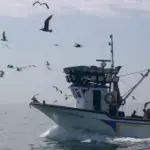

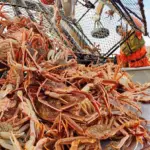



Fishing causes forage fish stocks to drop
Fishing could be causing a collapse in species of forage fish including herring, anchovies and sardines, according to a new study published in the ‘Proceedings of the National Academy of Sciences’.
Some of the largest fisheries in the world target these species, and these ‘baitfish’ are also a key source of food for larger marine animals like salmon, tuna, seabirds and whales. Scientists have known about wide fluctuations in the abundance of forage fish for a while, but it’s not yet been figured out whether population collapses are entirely natural or related to fishing.
According to the study, fishing is to blame for the collapse of forage fish stocks and recommends risk-based management tools that would track a fishery’s numbers and suspend fishing when necessary.
“We’ve identified the fingerprint of fishing on population fluctuations, finding that fishing makes the troughs of population cycles deeper. This is particularly important given the vital role these species play in food webs,” said lead author Tim Essington, a University of Washington professor of aquatic and fishery sciences.
Like other studies, this latest research also suggests that precautionary management may be particularly important with forage fish. But this study goes further, using simulations to look at a specific management strategy: suspending fishing when a population falls to less than half of its long-term average. They found that this strategy would prevent 64% of collapses, but would reduce the average catch by only 2% over the long term.
“The good news is we find that simple strategies can avoid the worst of the ecological impacts, with little costs to fisheries,” Mr Essington added. “Widespread application of these types of strategies would sustain the benefits people get from forage fish while allowing for sustainable fishing.”
Scientists reviewed a large global data set of 55 forage fish stocks. Of these, 27 had collapsed at some point, meaning they had fallen to a quarter or less of their average biomass.
The study revealed that fishing was particularly intense before and during the collapse, about 50 to 200% higher than the average rate. The population’s growth rate was plummeting at the same time, but this drop could explain only a small number of the collapses.
Scientists also compared the forage fish fluctuations to simulations of natural, random fluctuations. To generate these simulations, they used the magnitudes and frequencies of fluctuation in each of the 55 stocks in the data set.
They produced 1,000 simulations based on the assumption that the 55 stocks fluctuated randomly, but with the same amplitude and frequency observed in the real data. They found that collapses were more common in the real stocks than in 97% of the simulations, leading them to conclude that fishing is a likely contributor to forage fish collapses.
Forage fish eventually rebound, but the study highlights how the collapses deprive other species of food and fishermen of income for as long as the population is depressed.
Video: University of Washington
Related Articles
 FISHERIES
 FISHERIES
 WORLD FISHING EVENTS