




Fish tagging develops in Pacific Northwest
Tracking fish and understanding how they swim through hydroelectric dams is set to get easier thanks to a new injectable acoustic fish tag.
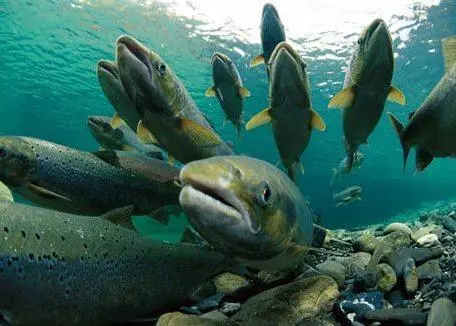
Developed by the US Department of Energy’s Pacific Northwest National Laboratory (PNNL), the tag can be safely and quickly inserted into young fish by researchers with a syringe. Scientists say injecting the tag instead of surgically inserting it is less invasive and enables the fish to heal faster, which can also provide more reliable information about fish behaviour.
“Tags have been used to track and evaluate fish movement for decades, but this is the first acoustic transmitter than can be inserted with a simple needle injection,” said Zhiqun Deng, a scientist at the PNNL.
The Juvenile Salmon Acoustic Telemetry System (JSATS) was originally developed back in 2001 at the request of the US Army of Corps of Engineers’ Portland District, which operates several dams in the Pacific Northwest.
The system, which includes tags, sounds receivers and software, was initially designed to provide a more accurate picture of how young salmon migrate from their birthplace in the Columbia River Basin waters to the open Pacific Ocean. The system’s use has since expanded to other fish species, for a variety of waterpower structures, and beyond the Northwest, including in California, Australia and Brazil.
Tags release quiet beeps that are picked up by receivers placed in rivers, lakes and other water bodies as tagged fish swim by. Using the receiver data, scientists are able to map out the 3D location of each fish and determine if fish are injured during their travels. PNNL says this information can help make dams more fish-friendly by revising their operations or altering their physical structure.
Weighing just 217 milligrams when dry and measuring 15mm in length, the tag can intermittently beep as often as every 0.4 seconds, or less frequently, depending on a study’s particular needs. Its strong battery means the tag can release these sounds for an average of 120 days when beeps are sent every three seconds.
PNNL says it intends to transfer the new injectable tag to a commercial vendor that will independently manufacture and sell it. An even smaller tag is also being developed for juvenile eels and lamprey.
Related Articles
 FISHERIES
 FISHERIES
 WORLD FISHING EVENTS