


First farmed fish harvest in US waters
Marine biologists at Kampachi Farms have announced the successful final harvest from the Velella Research Project, which raised fish for the first time in US Federal waters.
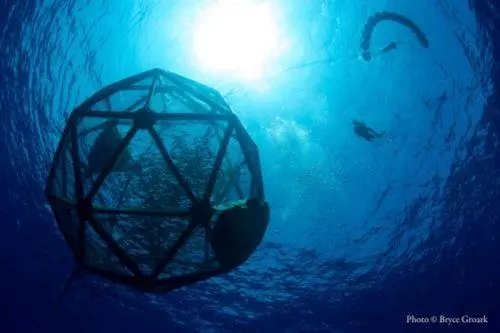
This harvest completes the grow-out cycle of sashimi-grade kampachi fish from an unanchored drifter pen that has been riding eddies in the open ocean, 3-75 miles offshore of the Big Island of Hawaii, since last summer.
“This final harvest far surpassed our expectations,” said Neil Anthony Sims, Co-CEO of Kampachi Farms. “The fish thrived in the research net pen far from shore, with phenomenal growth rates and superb fish health…and without any negative impact on water quality, the ocean floor, wild fish or marine mammals.”
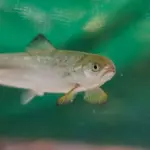
The research project raised kampachi (a tropical yellowtail) in a single unanchored, submersible net pen tethered to a manned sailing vessel, in water up to 12,000 feet deep.
The kampachi were fed a sustainable commercial diet that replaced a significant amount of fishmeal and fish oil with soy and other alternative agricultural proteins. No antibiotics, hormones or pesticides were used throughout the seven-month trial.
Mr Sims reported that the kampachi reached an average of 5.6lbs in six months, resulting in a first harvest a full three months ahead of schedule.
He said that fish health was superb throughout the trial, with an overall mortality rate of less than 2%, compared with a standard aquaculture mortality rate of 15%. Sample testing showed that the kampachi had a fat content of 33%, making this an extraordinarily healthful fish for human consumption, high in heart-healthy Omega-3s with no discernible mercury or other contaminants.
“The success of the Velella research demonstrates that we can grow fish in the open ocean with no negative impact on pristine ocean ecosystems,” said Mr Sims. “We must now apply ourselves to responsibly scale up this industry, to meet the growing global demand for high-quality seafood.”
The next phase of this research will test a single-point mooring six miles offshore in water 6,000 feet deep, where the pen can move freely in currents and still be within easy range of shore for supply delivery and crew rotation.
Related Articles
 FISHERIES
 FISHERIES
 WORLD FISHING EVENTS