



Fin removal for better traceability
Research conducted by Nofima indicates that visible marking of farmed salmon will make it easier to differentiate escaped farmed salmon from wild salmon – with removal of the adipose fin in farmed salmon being the easiest and cheapest method.
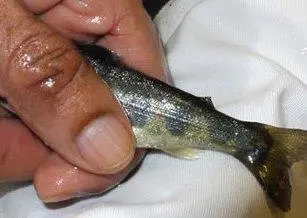
During the project Nofima tested different methods for external marking of farmed salmon, which is necessary for secure identification of escaped farmed salmon, including complete and partial removal of the adipose fin, freeze branding and visible implant elastomer (VIE).
The marking is performed on anaesthetised fish at a weight of 20-50g, and Nofima says that there is no evidence to indicate that the fish have a negative reaction to the adipose fin removal.
“There is reason to believe that this is no different to the tagging of animals, which has been common for a long time,” says senior scientist Atle Mortensen.
Removal of the adipose fin has shown to be the most effective method of tagging – partial removal meant the fin was able to grow back, and after 10 months the freeze branding had disappeared and the VIE marking was very difficult to read.
The Norwegian Food Safety Authority recommends that such marking should occur in conjunction with vaccination to avoid unnecessary strain on both fish and people.
“Automatic adipose fin removal is possible, but this cannot currently be combined with vaccination,” says Mr Mortensen. “The best option therefore would be fitting vaccination machines with equipment for automatic marking. Even though there is major uncertainty surrounding the costs, everything indicates that adipose fin removal is the cheapest and most efficient tagging method.”
Related Articles
 FISHERIES
 FISHERIES
 WORLD FISHING EVENTS