




Feed the world – with aquaculture
Fish farming could help feed a hungry world and protect natural fish populations at the same time. Jason Robinson from ITT Water and Wastewater looks at how this industry has developed globally over the last 10 years.
The demand for seafood far outpaces the productive capacity of oceans, lakes and streams, making aquaculture – fish farming – one of the world’s fastest growing food-related industries. According to the Rome-based Food and Agriculture Organisation of the United Nations (FAO), global aquaculture production in 1999 was about 43 million metric tonnes, valued at about $54bn. This continued to increase cumulatively by 30% over the following four years.
In 1999 a third of all fish consumed globally was farmed, rather than caught in open waters. Since then world aquaculture output has been ever increasing as the demand for fresh fish continues to grow.
Globally, aquaculture ranges from large-scale commercially run fish farms in coastal regions to backyard ponds run by families in land-locked regions. In Indonesia, for example, 78% of farming households cultivate fish in small ponds. In China, millions of tonnes of carp are raised in inland ponds, accounting for more than two thirds of the world’s aquaculture production, according to the FAO.
Salmon, trout, tilapia, catfish, sea bass, shrimp, oysters and mussels also are eminently farmable. But aquaculture, long a subsistence activity, increasingly caters to fancier tastes. Consumers clamour for exotic fish and speciality versions of the standards – pink salmon, for example. In the UK, the major growth story for seafood has been warm water prawns such as tiger and king prawns.
Production of farmed Atlantic salmon continues to increase and demonstrates that modern aquaculture is not only a source of high-quality food, it is also an important source of employment and revenue in many countries.
Aquaculture is seen as a way of feeding a growing global population without depleting the seas of more fish – a step towards ensuring global food security.
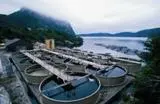
As the industry continues its meteoric rise, aquaculture companies are searching for ways to become more efficient and productive while keeping an eye on their environmental impact as a business, together with maintaining a healthy habitat for the fish. Therefore the demand for new and improved techniques and technology to support the industry in such areas as the movement of water, aeration, filtration and disinfection of water is of critical importance.
Statistics suggest that farmed fish have a clear edge in sheer efficiency. Genetically engineered to grow quickly, farmed salmon reach market size in about 18 months, twice as fast as wild salmon. But large-scale industrial farming has come under attack in recent years.
“Salmon aquaculture now constitutes a major threat to wild salmon stocks,” said the World Wildlife Foundation in a report in May 2001. In the United States, the state of Maine has declared the Atlantic salmon an endangered species.
According to an article in the New York Times, the number of Atlantic salmon in North American waters declined from 1.5 million to 350,000 in the three decades before 2000.
Aquaculture is here to stay – in part because the conventional industry is in decline. The numbers of many popular fish species are decreasing, and the overfishing problem appears to be getting worse. According to the FAO, more than two-thirds of all commercially important fish populations could be classified as overexploited.
Fish farming produces a wholesome source of protein, provides jobs and enhances the global food supply when fish stocks are under threat around the world.
The FAO suggests fish farming as a solution to both fishing stock depletion and world hunger – at least if its adverse effects can be controlled. To that end, international organisations have developed policies and regulations to promote sustainable and environmentally responsible aquaculture practices.
ITT Water & Wastewater continues to develop new and improved products and services for aquaculture, in areas such as recycling water, which provide optimal water treatment and transport and help to maintain a healthy environment for fish stocks. If the industry can embrace new technologies and techniques like this, aquaculture can not only help to preserve wild species and ecosystems, but also improve the quality and quantity of the fish they produce.
In the UK, the fish and seafood market has grown steadily over the last 10 years and is forecast a further 35% growth by 2011 to reach £2.7bn – investment in efficiency has never seemed so profitable.
Related Articles
 AQUACULTURE
 SEAFOOD
 SEAFOOD