



A recent assessment of global marine fisheries discards by the Food and Agricultural Organisation (FAO) has estimated that more than nine million tonnes of catch is discarded annually, of which almost half is from bottom trawls.
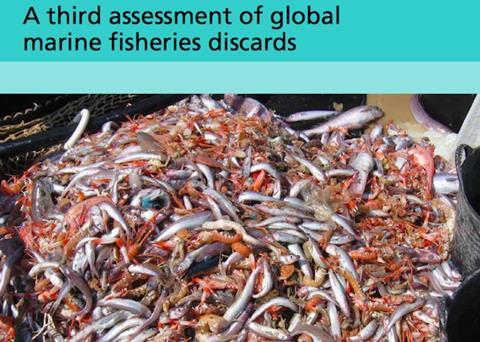
To produce ‘A Third Assessment of Global Marine Fisheries Discards’, published earlier this month and presented at the closing of the Horizon 2020 Discardless project in Denmark, the FAO monitored the status and trends of discard management using the ‘fishery-by-fishery’ approach employed in the second assessment published in 2005.
The writers of the report acknowledge that it has been difficult to quantify the progress made in reducing discards owing to differing methodologies used in producing estimates but states that the latest report shows that there has been greater public reporting of discards in the past ten years.
Improving picture but challenges remain
The update has used publicly available data over the past two decades to establish a time series discards. Additionally the study developed a new fisheries data table incorporating landings data from 2010 to 2014. Using this data the FAO estimates that annual discard was 9.1m tonnes of which 46% was from bottom trawls including otter trawls, shrimp trawls, pair bottom trawls, twin otter trawls and beam trawls.
The study also looked at bycatch and discards of endangered, threatened and protected species and found that whilst significant advances had been made, challenges remain especially for small-scale fisheries.
The review showed that assessing the effectiveness of fishery management actions is difficult because discards are related to a wide range of factors. Regulations are inconsistently enforced and piecemeal approaches can result in conflict whereby the bycatch of one particular species is increased as a result of reducing another’s.